7 Tips for Choosing Cigar Display Cases?

Choosing cigar display cases is not merely an exercise in style. It is a practical decision about protection, presentation, and daily maintenance.

Michael Herklots, a respected cigar retailer and industry specialist, often reminds enthusiasts, “The experience is everything.” That principle applies to every display case. Clear glass should present cigars without exposing them to harsh sunlight. Reliable seals should help maintain stable humidity. Cedar interiors can support a suitable storage environment, but cedar alone cannot replace a quality hygrometer and regular checks.

Looks can mislead. A heavy wooden case may seem excellent, yet poor hinges or a weak seal can create problems. I have seen attractive cases become inconvenient because shelves were too narrow for larger ring gauges. That detail matters. So does access. If retrieving one cigar disturbs the rest, the design may need reconsideration.

This guide explores seven practical tips for choosing cigar display cases. It considers capacity, humidity control, visibility, materials, lighting, security, and cleaning. Each point connects appearance with real use. A case should fit the room, but it should also fit your routine. Measure the available space before ordering. Check the interior dimensions carefully. Leave room for airflow and future additions.

There is no perfect case for everyone. Collectors, retailers, and occasional enthusiasts often need different features. Even experienced buyers can overlook small weaknesses. Careful comparison helps. A well-chosen display case protects cigars responsibly while making the collection easier to appreciate.
7 Tips for Choosing Cigar Display Cases?

Define Your Cigar Display Case Needs and Available Space

Define your cigar display case needs before choosing its style. The Cigar Association of America’s 2023 import report recorded about 450 million premium cigars entering the United States. That volume reflects steady demand, but every cigar collection has different storage requirements. Count your cigars, measure their lengths, and allow room for future purchases. A case holding 25 cigars may feel generous today. It can become crowded quickly.

Tip 1: Measure the available space carefully. Record width, depth, and height, including door clearance. A bright window, radiator, or kitchen wall can create damaging heat changes. The National Institute of Standards and Technology recommends stable indoor conditions for sensitive materials, and cigars also benefit from avoiding sharp temperature swings. Leave several centimeters around the case for airflow and maintenance. My first estimate was too optimistic.

Tip 2: Choose capacity by cigar size, not quantity alone. Thick ring gauges require wider shelves and more spacing. For long-term storage, many cigar specialists target approximately 65–70% relative humidity and near-room temperature. These figures are practical guidelines, not guarantees. The Cigar Association of America’s market data supports planning for collection growth, while storage research shows that stability matters more than chasing one perfect number. Use a calibrated hygrometer, inspect seals, and reconsider the layout after a few weeks.

Compare Materials, Construction Quality, and Visual Design

7 Tips for Choosing Cigar Display Cases?

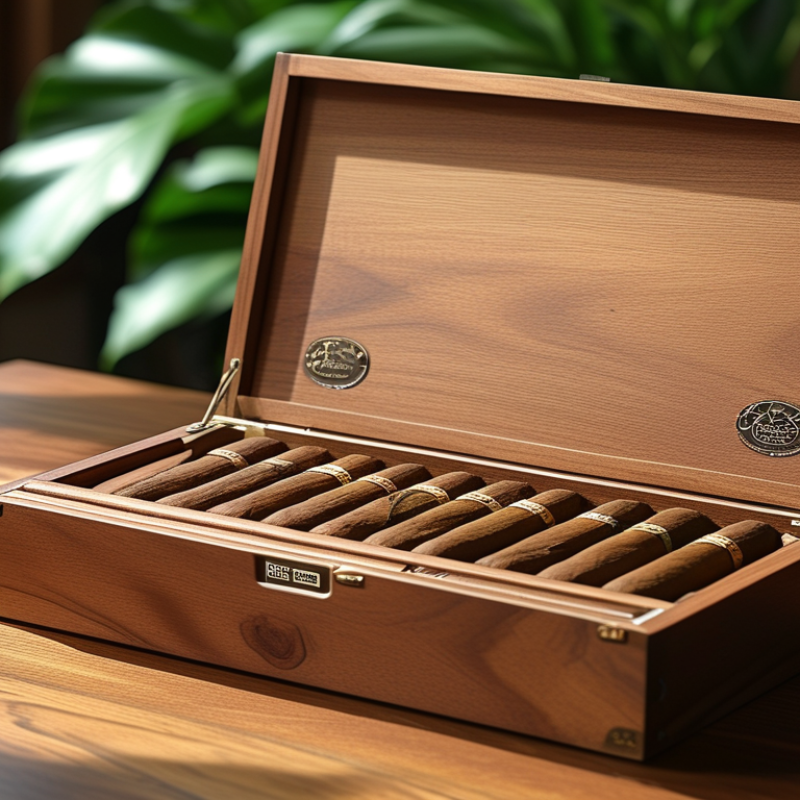
Material affects both protection and appearance. Solid wood offers warmth, while acrylic provides a clear, modern view. Glass resists visual distortion but may feel heavier. Cedar lining can support a stable storage environment when properly prepared. Avoid cases with strong chemical odors or rough interior surfaces. Your cigars should not touch unfinished wood.

Construction quality deserves close inspection. Check whether the lid closes evenly and the hinges move without scraping. A dependable seal helps reduce unwanted air exchange. Look for tight joints, smooth edges, and a lining that stays firmly attached. A digital hygrometer can improve monitoring, but placement matters. Keep it visible without blocking the display.

Visual design should support the collection, not overpower it. Choose proportions that fit your shelf and leave enough space around the case. Clear panels need clean edges and minimal glare. Dark finishes hide dust, though they also hide scratches. That trade-off is easy to miss. I once preferred a beautiful case with a weak latch, and that choice proved impractical. Inspect function before decoration. Consider removable trays, balanced lighting, and an accessible opening angle. The best display case feels deliberate, protects its contents, and remains easy to maintain.

7 Tips for Choosing Cigar Display Cases? - Compare Materials, Construction Quality, and Visual Design

Tip Comparison Dimension Reliable Standard or Benchmark Advantages Potential Drawbacks Inspection Checklist
1 Choose a humidity-suitable interior For long-term cigar storage, the interior should support stable relative humidity, commonly around 65%–72%, depending on cigar type and personal preference. Helps reduce the risk of cigars becoming excessively dry or overly moist. A display case without a suitable humidity system may be decorative but unsuitable for aging or extended storage. Check whether the case accepts a humidification device, has adequate air circulation, and allows a hygrometer to be placed where it can be read easily.
2 Compare wood and lining materials Untreated Spanish cedar is widely used in humidors because it absorbs and releases moisture and has a distinctive aroma. Other woods may be suitable when properly sealed and isolated from cigars. Spanish cedar can contribute to humidity buffering, provide a traditional appearance, and help discourage certain tobacco pests. Wood quality varies, and strong odors, excessive resin, or chemical finishes can affect cigars. Glass and metal provide visibility but do not regulate humidity by themselves. Look for clean, evenly fitted lining, no strong chemical odor, no visible mold, and no unfinished edges that could shed particles.
3 Evaluate construction quality A well-built case should have aligned joints, a level base, secure hinges, and a lid that closes consistently without excessive force. Better construction improves durability, protects cigars from physical damage, and supports more consistent internal conditions. Poorly assembled cases can warp, develop gaps, or place pressure on the lid and hinges over time. Inspect corners, joinery, screws, hinges, feet, drawer movement, and the stability of shelves or trays.
4 Check the seal and access system A display humidor should close evenly around the perimeter. A gasket or close-fitting lid can reduce unnecessary air exchange. A better seal makes humidity management more predictable and can reduce humidification frequency. An airtight case is not automatically ideal; cigars still need appropriate humidity management and should not be stored in stagnant or excessively damp conditions. Close the lid gently, check for uneven gaps, verify latch alignment, and confirm that the seal does not require excessive pressure.
5 Consider glass, acrylic, and light exposure Clear panels improve visibility, but cigars should be kept away from direct sunlight and strong heat. UV-filtering or tinted glazing can offer additional protection. Glass offers a premium appearance and scratch resistance; acrylic is lighter and less likely to shatter. Clear materials can admit light and heat, while acrylic may scratch more easily and can accumulate static. Check panel thickness, clarity, edge finishing, UV protection, glare, and whether the case can be positioned away from windows or heat sources.
6 Match capacity and layout to the collection Allow enough space for airflow and handling. Trays, dividers, or adjustable shelves should not compress cigar boxes or individual cigars. A suitable layout improves organization, presentation, and access while reducing unnecessary handling. Overestimating capacity can lead to overcrowding, restricted airflow, and difficulty checking individual cigars. Measure cigar lengths and ring gauges, check shelf spacing, confirm removable components, and leave practical clearance around each cigar.
7 Assess visual design and placement Select finishes, colors, lighting, and proportions that complement the room while keeping the case away from direct sun, radiators, kitchens, and areas with large temperature swings. A balanced design can function as furniture or a display feature while keeping cigars visible and organized. Highly decorative finishes may prioritize appearance over sealing, maintenance, capacity, or temperature stability. Review viewing angles, finish durability, dust resistance, lighting heat, cleaning access, footprint, and compatibility with the surrounding décor.

Practical note: A display case is only suitable for cigar storage when its materials, seal, humidity-control method, and placement work together. Use a calibrated hygrometer and monitor conditions regularly.

Evaluate Humidity Control and Cigar Preservation Features

7 Tips for Choosing Cigar Display Cases: Evaluate Humidity Control and Cigar Preservation Features

A display case should protect cigars, not merely show them. Tip one: choose stable humidity control, usually around 65–70% relative humidity. Tip two: require a digital hygrometer with calibration access. ASTM E104-20 explains accepted methods for checking constant relative humidity, which is more dependable than trusting a decorative dial. Tip three: test the door seal. A thin paper strip should meet firm resistance when pulled. Small leaks create large swings over time.

Tip four: inspect the lining. Untreated Spanish cedar can support aroma exchange and moisture buffering, but excessive wood odor may affect delicate cigars. Tip five: keep temperature near 18–21°C. The ASHRAE Handbook—Fundamentals identifies temperature stability as important for controlling condensation and material deterioration. Tip six: select opaque or UV-resistant panels. Direct sunlight can heat the interior quickly, even when room temperature seems comfortable. Tip seven: leave space between cigars and shelves. Air needs a path.

Humidity deserves careful judgment. The U.S. Environmental Protection Agency recommends indoor relative humidity below 60% to reduce mold risk. Cigar storage often requires higher humidity, so cleanliness, ventilation, and monitoring become essential. This is an imperfect balance. A case can show 68% while hidden corners remain damp. I would recheck readings at different shelf levels for several days, not accept the first number. Fancy hardware helps, but consistent measurements matter more.

Check Capacity, Accessibility, Security, and Maintenance

7 Tips for Choosing Cigar Display Cases

Tip 1: Check capacity before appearance. A case should hold the planned inventory without tight stacking. Leave space around trays for air movement and quick counting. Tip 2: Measure shelf depth carefully. Large boxes can block smaller items behind them. In practical store inspections, poor visibility often causes avoidable handling.

Tip 3: Prioritize accessibility. Sliding shelves, clear labels, and adjustable dividers reduce repeated opening. Tip 4: Monitor internal conditions. ISO 3402 specifies 22 ±1°C and 60 ±2% relative humidity for conditioning tobacco products. This is a testing reference, not a universal retail rule. Still, it provides a useful control point. Tip 5: Choose a case with a readable hygrometer and simple calibration access. I would not trust a hidden sensor.

Tip 6: Review security features. Tempered glass, a reliable lock, strong hinges, and stable anchoring protect displayed goods from casual access. Local retail and fire-safety requirements still need checking. Tip 7: Plan maintenance before purchase. Smooth, sealed surfaces allow fast cleaning, while removable trays simplify inspection. Check humidity readings weekly and verify sensors periodically. Dust gathers in corners. Small oversights matter. A perfect case does not exist; an attractive design may still fail when access, airflow, or maintenance is ignored.

7 Tips for Choosing Cigar Display Cases

Use this practical evaluation guide when comparing cigar display cases. Capacity should match your collection, while accessibility, security, humidity control, visibility, construction quality, and maintenance requirements help protect cigars and simplify daily use. A commonly recommended storage range is approximately 65–70% relative humidity and 18–21°C.

Balance Budget, Long-Term Value, and Personal Style

7 Tips for Choosing Cigar Display Cases

Balance Budget, Long-Term Value, and Personal Style

A display case should protect cigars, not merely decorate a room. In my experience, measuring the available space first prevents expensive mistakes. Check the case’s capacity, seal quality, and humidity control before admiring its finish. A tight lid matters.

Choose durable materials that resist warping and moisture changes. Untreated cedar can support a stable environment, but confirm the interior is suitable for storage. A reliable hygrometer is essential. Cheap readings can mislead you. That happened to me once.

Consider UV protection if the case will sit near a window. Sunlight can fade labels and damage the presentation. Select adjustable shelves when possible, especially if your collection may grow. Buying slightly larger is often wiser than replacing a cramped case later.

Compare the total cost, not only the purchase price. Include replacement seals, humidity supplies, cleaning, and possible repairs. A simple case may offer better long-term value than a fashionable model with fragile hardware. Still, personal style matters. Wood tones, glass panels, and metal details should suit your room.

Check access and daily handling. A heavy door or awkward latch becomes irritating quickly. Look for smooth hinges and stable placement. Ask whether maintenance feels realistic. If cleaning seems troublesome now, it will probably become worse later.

Review the seller’s specifications and return policy carefully. Clear measurements and material details suggest greater reliability. Be skeptical of dramatic claims without testing information. Good storage is practical, attractive, and slightly boring. That is not a flaw.

'