What Is an Anime Character Plush and How to Source It?
An Anime Character Plush is more than a soft replica of a popular figure. It combines character design, licensed artwork, fabric selection, safety testing, and emotional appeal. Buyers usually notice the embroidered eyes first. They also feel the stuffing, check the stitching, and compare the product with official reference images.
Richard Gottlieb, a veteran toy-industry consultant and publisher of Global Toy Experts, offers a useful principle: “The toy business is a relationship business.” That idea matters when sourcing Anime Character Plush. A reliable supplier must understand the character, protect the brand’s visual identity, and communicate clearly about production limits.
Sourcing begins with ownership and licensing verification. A supplier should provide transparent business details, material information, sample photographs, and quality-control procedures. Ask about fabric composition, filling density, embroidery accuracy, colorfastness, packaging, and minimum order quantities. A pre-production sample can reveal uneven ears, loose threads, or colors that look different under warehouse lighting.
Small details matter.
Factory experience is valuable, but it is not enough. A polished sample can still hide inconsistent batch quality. I have learned that clear specifications prevent more problems than friendly promises. Buyers should document measurements, seam tolerances, labeling requirements, inspection standards, and delivery expectations.
The safest approach is practical and patient. Compare several factories, request physical samples, review inspection evidence, and keep written records. The cheapest quotation may become expensive after rework, delays, or rejected merchandise. Good sourcing protects both the customer’s trust and the character’s identity.
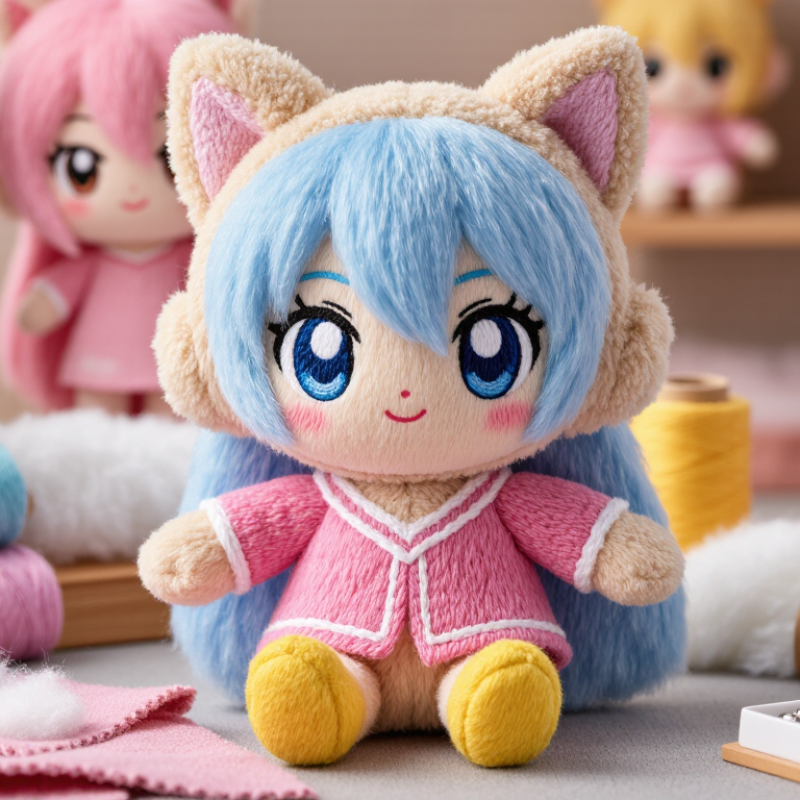
Define Anime Character Plush: Design, Materials, Scale, and Licensing
An anime character plush is a soft, three-dimensional figure based on a stylized animated character. Its design depends on recognizable features, such as eye shape, hair color, costumes, and signature accessories. Good plush design balances accuracy with softness. A face that looks perfect on paper may appear flat after stitching. This happens often.
Materials affect comfort, durability, and production cost. Short-pile polyester fabric creates clean details and resists heavy shedding. Longer fleece feels warmer but can hide small facial elements. Cotton or polyester filling controls firmness, while embroidered eyes usually offer better safety and consistency than loose plastic parts. Samples should be checked for uneven seams, color bleeding, odor, and weak attachments before larger production.
Scale should match the intended use. A palm-sized plush suits gifts and display shelves, while a larger version needs stronger seams and more filling support. Licensing is equally important. Before sourcing, confirm who owns the character, whether commercial production is authorized, and which countries and product sizes are covered. Written approval should describe artwork, quantities, packaging, and quality standards clearly.
Tips: Request a physical sample, not only digital images. Measure the plush after stuffing. Keep approval records. Compare at least two factories, because the cheapest quote may hide weaker fabric or limited inspection. My own caution is simple: attractive photos cannot prove reliable production. Check the details.
What Is an Anime Character Plush and How to Source It?
Typical plush size tiers used when defining design specifications, materials, packaging, and licensing requirements.
Plush specifications are commonly organized by finished height. Mini and small formats are suitable for keyrings, bags, and compact retail displays, while medium, large, and jumbo formats require more filling material, larger packaging, and higher shipping volume. Final production should also confirm fabric composition, stuffing safety, character artwork approval, and applicable toy-safety labeling.
Read the Market: Anime Market Valued at $31.2B in 2023 (GVR)
What Is an Anime Character Plush and How to Source It?
The anime market was valued at $31.2 billion in 2023, according to Grand View Research. This figure covers more than plush toys, including streaming, games, publishing, and merchandise. Still, it signals strong demand for character-based products. An anime character plush turns a fictional figure into a soft, physical collectible. Buyers often judge facial details, fabric feel, stitching, and size before price. Small defects can damage trust quickly.
Sourcing requires more than finding a low factory quote. Review sample photos, material specifications, production capacity, and quality-control records. Ask whether the design has proper authorization before placing an order. Confirm dimensions with a physical sample, not only a digital drawing. My first demand forecast was too optimistic because I ignored seasonal buying patterns. That mistake taught me to compare search interest, preorder data, and supplier lead times. Inventory should follow evidence, not excitement.
Tips: Start with one or two designs. Request samples from several suppliers. Check seams, embroidery, filling, labels, and packaging by hand. Keep written approval records. Avoid promising exact delivery dates until production is confirmed. Plush quality can vary between batches, so inspect random units before shipment. A clear defect standard helps both sides.
Verify Rights and Suppliers: Licensing, MOQ, OEM/ODM, and Factory Audits
An anime character plush is a soft, stuffed figure based on an animated character’s design. Sourcing one involves more than selecting fabric and filling. The buyer must verify who owns the character artwork and who may authorize production. Request written licensing evidence, approved artwork, territory details, and contract dates. Do not rely on screenshots or informal messages. Rights can expire.
Supplier screening needs equal care. Ask for the minimum order quantity, sample charges, production capacity, and payment terms. Clarify whether the factory offers OEM or ODM services. OEM follows your approved design, while ODM may adapt an existing factory concept. Confirm who owns revised patterns and digital files. A low MOQ may sound attractive, but it can increase unit costs and limit quality control. Sometimes, the cheapest quote is incomplete.
Audit the factory before placing a large order. Check sewing lines, stuffing areas, metal detection, storage conditions, and final inspection records. Review test reports for fabric, dyes, seams, and small components. Ask for batch photos with dates and random sample checks. A video tour helps, but it cannot replace an independent audit. I have seen polished samples hide inconsistent stitching in mass production. That risk deserves written controls, not optimism. Keep approved samples, inspection standards, and corrective actions in one shared file. Supplier promises are useful, but documented evidence is safer.
Compare Quotes and Samples: Cost, Lead Time, QC, and Logistics
An anime character plush is a soft collectible shaped around a fictional character’s features, costume, and expression. Sourcing it requires more than finding the lowest factory quote. Send every supplier the same specification sheet, including finished height, fabric type, filling, embroidery details, accessories, packaging, order quantity, and delivery location. Compare unit price, mold or sampling fees, packaging costs, and shipping charges separately. A low quote may exclude cartons, inspection, or export handling.
Samples expose problems that spreadsheets cannot show. Check the plush under bright light. Look for uneven stitching, loose threads, distorted facial embroidery, hard seams, and color differences between body panels. Request a pre-production sample before approving bulk work.
My first comparison was incomplete because I reviewed appearance but ignored stuffing density. The sample looked attractive, yet it collapsed after handling. That mistake changed my QC checklist.
Ask for measurable tolerances, such as height variation and embroidery alignment. Safety documentation should match the destination market and the product’s intended age range. Do not trust photos alone.
Lead time should cover sampling, revisions, material purchasing, production, inspection, and rework. Ask for dates, not vague promises. Also request carton dimensions, gross weight, shipping options, and estimated customs paperwork. Sea freight may reduce cost but needs more planning. Air freight is faster, but margins can disappear. Keep a practical buffer for holidays, fabric shortages, and failed inspections. Compare the complete landed cost, then record every assumption. Some estimates still change. That is normal, but unexplained changes deserve written clarification.

 '
'
