How to Choose the Best ATV Tie Downs in 2026?

Choosing the best Atv Tie Downs in 2026 requires more than comparing prices or bright packaging. A secure system must match your ATV’s weight, frame design, trailer anchors, and transport conditions. Small details matter. Webbing width, stitching quality, hooks, ratchet strength, and abrasion protection can affect stability on every mile.

From practical loading experience, I have learned that convenience often hides weaknesses. A strap may feel strong in a garage, yet slip against a wet rail or rub against a sharp frame edge. Check the manufacturer’s working load limit, not only the breaking strength. Inspect every strap for cuts, faded fibers, bent hooks, and damaged ratchets before use. Keep contact points away from exhaust heat and moving suspension parts. That sounds obvious.

It is not always obvious.

This guide examines Atv Tie Downs through a careful, real-world lens. It considers single-strap kits, four-point systems, soft loops, protective sleeves, and locking features. It also explains how weather, repeated tensioning, and poor anchor placement can reduce confidence during transport. Product specifications deserve attention, but they should not replace hands-on inspection. Some recommendations may change when your ATV, trailer, or route changes. That is worth admitting. The “best” option is rarely universal. A dependable choice is the one that fits your equipment, is easy to tension correctly, and remains secure after a short stop-and-check. Safety should guide the purchase, not marketing language.
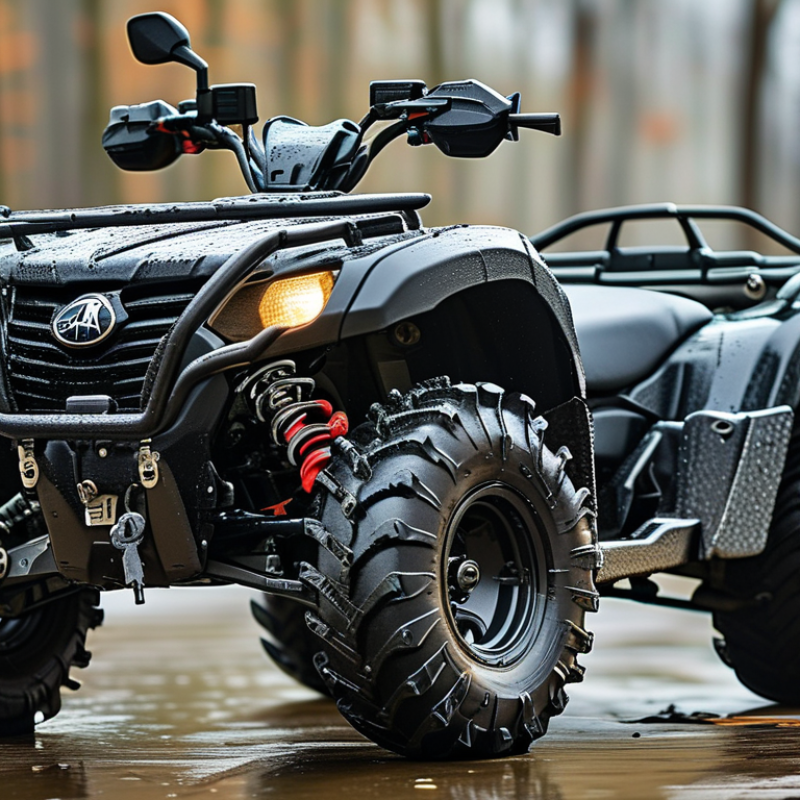
How to Choose the Best ATV Tie Downs in 2026?

Understanding ATV Tie Down Types and Their Intended Uses

Choosing the best ATV tie downs in 2026 starts with matching the tie down type to the transport situation. Ratchet straps provide strong tension for heavy ATVs, long trips, and rough road surfaces. Cam buckle straps work well for lighter machines and frequent loading. They are quicker, but they offer less tightening force. Soft loops protect painted frames and create safer attachment points. Wheel nets hold tires securely without squeezing handlebars or brake lines.

The FMCSA Cargo Securement Handbook requires the aggregate working load limit to equal at least 50% of the cargo weight. This figure is a useful professional benchmark, even for private ATV transport. Check every strap’s label, stitching, hooks, and anchor points. A damaged strap is not “almost good enough.”

Tips:

  • Use two front straps and two rear straps.
  • Compress the suspension slightly, not fully.
  • Keep straps away from sharp edges.
  • Recheck tension after the first few miles.
  • Never attach to plastic racks or fragile controls.

In practice, axle straps and wheel chocks often improve stability more than simply buying stronger webbing. The common mistake is choosing a high-rated strap with poor attachment geometry. I would rather use a correctly positioned medium-duty system than an oversized strap pulling at an awkward angle. CPSC ATV injury reports show that transport preparation deserves attention, although tie downs alone cannot prevent every incident. Inspect the load again whenever weather, distance, or road conditions change.

Assessing Load Capacity, Strap Materials, and Hardware Strength

How to Choose the Best ATV Tie Downs in 2026?

Load capacity comes before color, length, or price. Weigh the ATV with fuel, tools, racks, and accessories included. Then check each strap’s working load limit, not its breaking strength. Under FMCSA Cargo Securement Rules, the combined working load limit should equal at least half the cargo weight. For a 600-pound ATV, the combined rating should reach 300 pounds or more. I prefer extra capacity because real roads create sharp impacts, not steady laboratory loads. The label can still be confusing.

Strap material affects control and durability. Polyester stretches less than nylon and usually handles outdoor moisture better. Nylon can absorb water and lose tension, especially during repeated wet-and-dry cycles. Inspect every strap for cuts, melted fibers, fading, or crushed edges. WSTDA guidance recommends examining webbing, stitching, buckles, and hooks before use. Hardware strength matters equally. Choose hooks that fully seat in the trailer’s anchor points, with no side loading. A thick strap with a weak buckle is still a weak tie down. I once trusted appearance too much; that mistake deserves repeating here.

Tips: Measure the anchor distance first. Keep straps clear of exhaust heat and sharp rack corners. Use edge protection where metal contacts webbing. Tighten until secure, not until the suspension is compressed. Recheck tension after several miles, because settling can reduce tension. Document the strap ratings before purchase, and replace any strap with unreadable labeling. Sources: FMCSA, 49 CFR 393.102; Web Sling and Tie Down Association technical guidance.

How to Choose the Best ATV Tie Downs in 2026? - Assessing Load Capacity, Strap Materials, and Hardware Strength

ATV Use Case Recommended Strap Width Recommended Working Load Limit (WLL) per Strap Typical Minimum Break Strength Preferred Strap Material Suitable Hardware Recommended Quantity Best Application
Compact or youth ATV
Up to approximately 180 kg / 400 lb vehicle weight
25 mm / 1 in 450–680 kg / 1,000–1,500 lb 1,350–2,040 kg / 3,000–4,500 lb High-tenacity polyester; low stretch and good abrasion resistance Zinc-plated steel S-hooks or wire hooks with safety clips Four independent tie-downs Small trailers, utility beds, and short-distance transport
Standard recreational ATV
Approximately 180–300 kg / 400–660 lb vehicle weight
25–38 mm / 1–1.5 in 680–910 kg / 1,500–2,000 lb 2,040–2,720 kg / 4,500–6,000 lb Polyester webbing with reinforced stitching and protective sleeves Heavy-duty ratchets with forged steel hooks or axle straps Four tie-downs, plus a fifth if the trailer manufacturer recommends it General trailer transport and highway travel
Large utility or touring ATV
Approximately 300–450 kg / 660–990 lb vehicle weight
38 mm / 1.5 in 910–1,360 kg / 2,000–3,000 lb 2,720–4,080 kg / 6,000–9,000 lb Industrial-grade polyester with abrasion-resistant edge binding Forged ratchet handles, closed-loop fittings, and safety-latch hooks Four corner tie-downs and a separate parking brake or wheel restraint Heavy ATVs, rough roads, and longer transport distances
ATV with accessories or cargo
Vehicle plus racks, plow, storage box, or tools
38 mm / 1.5 in or wider At least 1,360 kg / 3,000 lb per strap At least 4,080 kg / 9,000 lb UV-resistant polyester with sewn-in load labels Heavy forged steel ratchets, safety latches, and rated anchor points Four or more, positioned to control forward, rearward, and lateral movement Loaded ATVs and transport over uneven terrain
Wheel-chock-assisted transport
ATV secured with a properly fitted wheel chock
25–38 mm / 1–1.5 in 680–1,360 kg / 1,500–3,000 lb 2,040–4,080 kg / 4,500–9,000 lb Polyester with soft loops or axle straps to protect suspension components Ratchets with protected hooks; avoid contact with brake lines and cables Four tie-downs; the chock must not replace tie-downs Preferred setup for reducing rolling and suspension movement
Selection and safety notes: Choose tie-downs based on the ATV’s actual loaded weight, the trailer’s rated anchor points, and the lowest-rated component in the system. Working Load Limit (WLL) is not the same as breaking strength; a commonly used design relationship is a minimum 3:1 break-strength-to-WLL ratio, but applicable transport regulations and equipment instructions should always take priority. Inspect webbing, stitching, hooks, and ratchets before every trip, and replace any tie-down showing cuts, melted fibers, severe abrasion, corrosion, or a missing load label.

Matching Tie Downs to Your ATV, Trailer, and Transport Conditions

Choosing ATV tie downs starts with the machine, not the strap. Check the ATV’s weight, frame shape, and approved anchor points. A heavy utility ATV needs a higher working load limit than a compact recreational model. Match the strap length to the distance between the ATV and trailer anchors. Excess webbing can flap against body panels. Keep hooks away from brake lines, cables, and sharp edges.

Your trailer changes the setup. Wide rails may need longer straps, while a narrow utility trailer may require shorter ones. Use four independent tie downs when possible, securing the front and rear separately. Add wheel chocks to reduce movement during braking. Ratchet mechanisms should close fully and remain easy to release. I have seen straps tighten unevenly when the ATV sits off-center. That small mistake can shift pressure onto one suspension side.

Tips: Inspect stitching, hooks, and webbing before every trip. Replace straps with cuts, melted fibers, rust, or stretched seams. Test the setup by pushing the ATV firmly from several angles. It should stay planted, but the suspension should not be crushed. Wet roads, dust, and long highway distances require more frequent checks. My own early assumption was that tighter always meant safer. It does not. Excessive tension can damage suspension components or bend weak trailer rails. Recheck every strap after the first short stop, because vibration often reveals problems that a driveway inspection misses.

Comparing Attachment Methods, Adjustability, and Ease of Use

How to Choose the Best ATV Tie Downs in 2026?

Choosing ATV tie downs starts with the attachment method. Soft loops protect painted frames and create secure anchor points without sharp hooks. S-hooks connect quickly, but they can shift when anchor space is limited. Ratchet straps offer strong tension control, while cam buckles are faster for lighter loads. I prefer ratchets for rough roads, though they can overtighten delicate parts. Fit matters.

Adjustability affects both security and handling. Choose straps with enough length to reach the ATV frame without excess webbing dragging near tires. A wide adjustment range helps when securing different ATV sizes or using varied trailer anchors. Check the working load limit, not only the breaking strength. The lower figure is more useful in real planning. Never compress suspension completely; it can stress components during transport.

Ease of use matters after a long day on the trail. Large handles, clear release levers, and smooth webbing reduce mistakes in cold or muddy conditions. I once selected a strap with excellent strength but a stiff release mechanism. It was frustrating and slowed every check. Test the buckle with gloves before buying. Inspect stitching, hooks, and abrasion points regularly. If the webbing shows cuts, melted fibers, or heavy fading, replace it. Secure loose strap ends so they cannot flap against the ATV or trailer.

Checking Safety Features, Durability, and Long-Term Value

Choosing ATV tie downs in 2026 means examining safety before price. In my workshop, I start with the working load limit, not the break strength printed in large type. The tie down should match the ATV’s weight and movement during braking or uneven travel. Webbing around 50 millimeters wide feels steadier against painted racks. Flat hooks may reduce scratches and slipping. Look closely. The ratchet should lock firmly, release smoothly, and have no sharp edges.

Durability appears in small details. I inspect reinforced stitching around every hook and ratchet connection. The webbing should resist sunlight, mud, and light moisture without becoming brittle. A protective sleeve helps when the strap touches a rail or sharp corner. Still, sleeves are not magic. They can hide cuts. I once trusted a clean-looking strap with a frayed underside and replaced it immediately. That mistake changed my inspection routine.

For long-term value, consider use, maintenance, and replacement costs. A dependable set should show clear load labels and practical care instructions. After each trip, I rinse away grit, dry the straps fully, and store them loosely in a dark cabinet. Do not leave tension on the ratchet for weeks. Before buying, test the mechanism while wearing gloves. Check whether the hooks stay seated during gentle movement. I still question unusually cheap options. Low cost can become repeated replacement for frequent riders.

How to Choose the Best ATV Tie Downs in 2026?

This practical evaluation framework prioritizes verified working load limits, secure attachment hardware, weather-resistant materials, and long-term replacement value when comparing ATV tie downs.

Safety features receive the highest priority because the tie down must remain secure under braking, vibration, and uneven-road conditions. Durability covers webbing resistance, stitching, hooks, and corrosion protection. Long-term value considers service life, ease of inspection, and replacement costs.

'