Top Skin Analysis Machines for Global Buyers?
Choosing a Skin Analysis Machine for international use requires more than comparing screen size, camera resolution, or software claims. Global buyers need dependable measurements, practical workflows, and evidence that supports real treatment decisions.
Dr. Howard Murad, dermatologist and founder of Murad, has said, “Healthy skin is a reflection of overall health.” This perspective remains useful when evaluating modern analysis equipment. A reliable machine should examine hydration, pigmentation, pores, texture, redness, and fine lines under controlled conditions. It should also explain results clearly, rather than overwhelm clients with colorful images.
Lighting matters greatly.
Different clinics may use daylight, warm lamps, or inconsistent room lighting. Strong systems help standardize image capture and reduce avoidable variation. Buyers should also review calibration procedures, data security, language support, training, warranty coverage, and after-sales service. These details often influence long-term value more than impressive demonstrations.
No device is perfect. That limitation deserves attention. Skin readings can change with recent washing, cosmetics, dehydration, medication, or camera positioning. Therefore, professionals should treat automated scores as clinical support, not absolute diagnoses. Independent validation and transparent technical documentation can improve confidence, but they cannot replace professional judgment.
This guide compares leading options for global buyers through a practical lens. It considers measurement quality, usability, integration, maintenance, and total ownership cost. Some machines may appear advanced yet offer weak reporting or limited support. Others may look modest but deliver consistent results in busy clinics. Careful buyers should test both.
What Are Skin Analysis Machines?
Top Skin Analysis Machines for Global Buyers?
What Are Skin Analysis Machines?
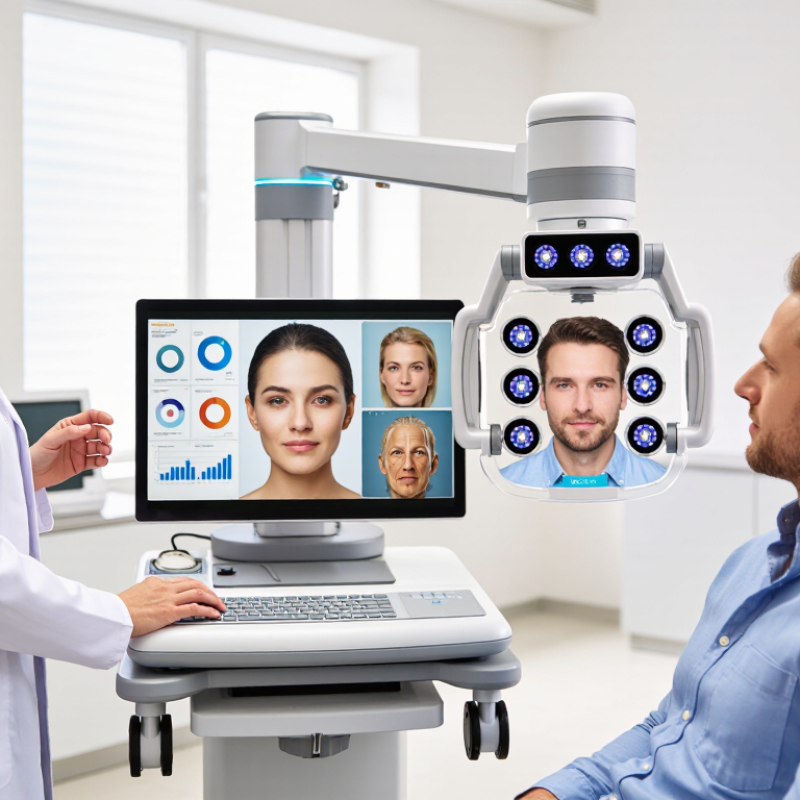
Skin analysis machines are digital imaging devices that examine visible skin conditions. They may assess pores, pigmentation, redness, wrinkles, texture, and estimated hydration. Most systems use cameras, controlled lighting, and image-processing software. Some models also use specialized light to reveal features that normal lighting cannot show.
These devices support consultations, treatment planning, and progress tracking. They do not replace a qualified medical examination. Results can change with lighting, makeup, skin moisture, and camera distance. No machine is perfectly objective. A trained professional should review every report instead of accepting its score automatically. Clear explanations also help clients understand what the images can and cannot prove.
Tips: Global buyers should check measurement methods, calibration records, data protection, cleaning procedures, and staff training. Ask whether the system has independent clinical evidence, not only sales claims. Confirm local regulatory requirements before importing or using it. Test the device on different skin tones and real working conditions. A beautiful interface is useful, but reliable measurements matter more.
Operators should record consistent imaging conditions during follow-up visits. They should also obtain informed consent before capturing or storing facial images. Some reports may sound precise while remaining only estimates. That limitation deserves honest communication. A practical machine is one that professionals can use consistently, explain responsibly, and maintain over time.
How Skin Analysis Machines Work
Skin analysis machines combine controlled lighting, cameras, sensors, and software. They do more than capture a normal photograph. Cross-polarized light reduces surface glare, while ultraviolet illumination can reveal uneven pigmentation and hidden oil patterns. Some systems also estimate pores, redness, wrinkles, hydration, and texture.
Lighting matters. A processor converts these images into measurable data. Its algorithm compares the results with reference images and produces color-coded maps or scores. Those scores can support consultations, product planning, and progress tracking. They do not replace a medical examination or laboratory test.
According to the World Health Organization’s 2023 skin-disease report, about 1.8 billion people may experience a skin condition at any moment. That scale increases demand for faster, standardized assessment.
The Global Burden of Disease 2021 study also identified skin and subcutaneous diseases among the world’s most prevalent health problems. Yet machine accuracy depends on calibration, image quality, skin tone representation, and operator technique. The process is not flawless.
A dry surface, strong room light, or recent cleansing can change readings. A 2024 review in npj Digital Medicine reported that artificial-intelligence performance often varies across datasets and demographic groups. Buyers should request validation details, repeatability data, and privacy controls. The most useful device is not always the one with the highest score. It is the one that produces consistent evidence in real working conditions.
Key Technologies Used in Skin Analysis
Top Skin Analysis Machines for Global Buyers?
Key Technologies Used in Skin Analysis
Modern skin analysis machines combine high-resolution RGB imaging, polarized light, ultraviolet imaging, and multispectral sensors. RGB cameras reveal pores, redness, and texture. Polarized light reduces surface glare and exposes uneven pigmentation. Ultraviolet imaging can highlight oil distribution and some sun-related changes. However, it is not a medical diagnosis.
Three-dimensional imaging adds depth measurements around wrinkles and facial contours. Some systems use artificial intelligence to compare images over time, while others calculate hydration, sebum, pore size, and pigmentation scores. Grand View Research’s 2024 dermatology devices analysis forecasts roughly 10% annual market growth through 2030, reflecting stronger demand for imaging and data-assisted assessment.
Reliable machines need controlled lighting, repeatable camera distance, and regular calibration. Sensors may perform differently across skin tones, climates, and moisture levels. Buyers should request validation data, image-security details, and operator training records. ISO 13485 is widely associated with medical-device quality systems, but certification alone does not prove measurement accuracy. No scan is perfectly objective. Even experienced operators can overinterpret attractive color maps. A small lighting error can change the result.
How to Compare Machines for Different Markets
Top Skin Analysis Machines for Global Buyers?
Comparing skin analysis machines across markets requires more than checking image resolution or the number of measured indicators. A device must perform reliably under local conditions. Humid salons, bright clinics, and dry retail spaces can affect readings. Test the machine in real rooms, not only in a showroom.
Skin tone performance deserves careful attention. Ask for validation data covering the populations you will serve. Check whether lighting is controlled and whether results remain consistent across repeated scans. A useful machine should explain its measurements clearly. Vague scores can confuse professionals and clients. Simple reports often work better.
Local workflows matter too. Confirm language options, data storage rules, training support, and software access. Some markets need offline operation because internet service is unstable. Others require stronger privacy controls or documented medical device compliance. Compare calibration schedules, warranty terms, and response times for technical support. Small delays can interrupt a busy clinic.
Price is only one part of the decision. Include installation, staff training, maintenance, and replacement costs. A low purchase price may hide higher operating demands. Run a small pilot with local users before making a large order. The results may challenge your first choice. That is useful. No machine is perfect for every market, and even experienced buyers can overvalue attractive dashboards while overlooking daily usability.
Global Buying Factors: Compliance, Support, and Cost
Top Skin Analysis Machines for Global Buyers?
Global Buying Factors: Compliance, Support, and Cost
Buying a skin analysis machine requires more than comparing images and screen size. Compliance should match the destination market, not only the supplier’s home country. Check electrical safety, electromagnetic compatibility, and applicable medical or cosmetic device rules. Requirements can differ between regions. Ask for current test reports, user manuals, labels, and import documents before payment. Privacy also matters when cameras capture facial images. Confirm where data is stored and who can access it.
Support affects daily reliability. Request installation guidance, operator training, software updates, and a clear repair process. A useful supplier should explain calibration steps in simple language. Ask how quickly technical teams respond across time zones. Spare parts may take weeks to arrive. That delay can stop consultations. Request a sample report and test the machine under real lighting. Store lighting is rarely perfect. Results may change with shadows, makeup, or camera distance.
Purchase price is only one part of cost. Include shipping, taxes, installation, subscriptions, calibration, and replacement accessories. A cheaper unit may become expensive after repeated service calls. However, expensive equipment is not automatically more accurate. I would avoid trusting impressive marketing claims without independent evidence. Buyers should compare warranty terms, measurable specifications, and documented performance. Some decisions remain imperfect because local service quality is hard to judge remotely. Get commitments in writing, even when the sales conversation feels reassuring.

 '
'
