What Is the Best Type of Sound Deadening Material in 2026?

The best sound deadening material in 2026 depends on the noise you want to reduce. Road rumble, engine vibration, and high-pitched wind noise travel differently. One thin mat rarely solves all three. That distinction matters.

The European Environment Agency’s Environmental Noise in Europe 2020 report estimated that 113 million people across reporting countries were exposed to long-term road traffic noise at or above 55 dB Lden. The World Health Organization’s 2018 Environmental Noise Guidelines recommend lower road-noise exposure levels. These figures describe environmental exposure, not cabin performance. Still, they show why quieter vehicles matter.

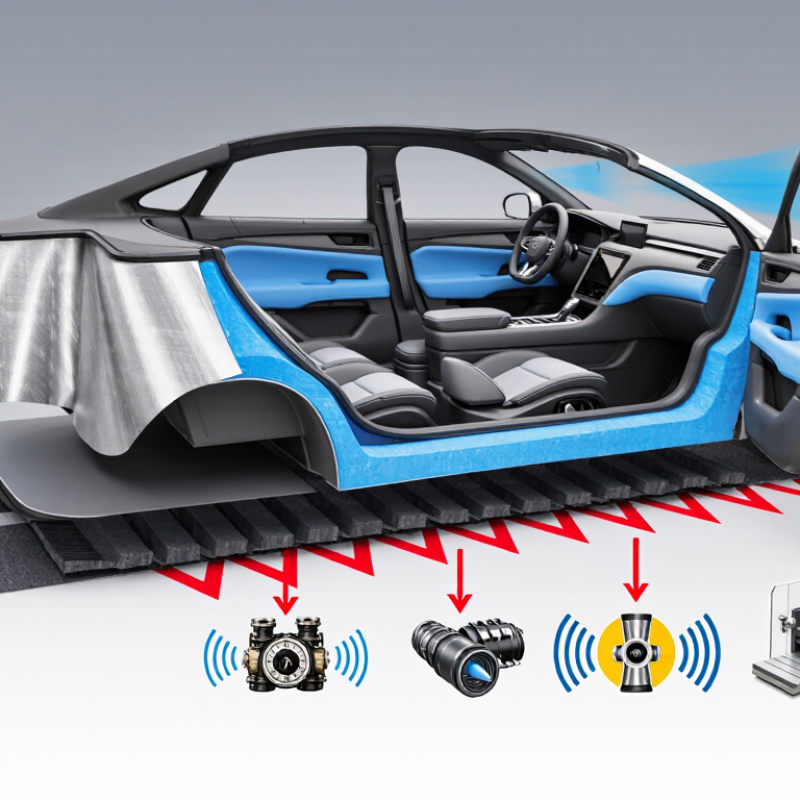
In a car, butyl-based damping sheets can reduce panel vibration, especially on doors and floor sections. Closed-cell foam can help decouple trim, while mass-loaded barriers target airborne noise. Results depend on coverage, installation, and the vehicle itself. More material is not automatically better; added weight and blocked drains can create problems. SAE J1400 provides a laboratory method for measuring sound transmission loss in automotive materials and assemblies, but laboratory ratings cannot fully predict real-world comfort. A door panel is not a test chamber.

This guide compares material types by function, fit, durability, and practical installation. It also separates measurable performance from marketing claims. Some recommendations remain imperfect because vehicle designs and road surfaces vary. The right choice is the one matched to the dominant noise source—not simply the thickest product on the shelf.
What Is the Best Type of Sound Deadening Material in 2026?

How Sound Deadening Materials Control Noise and Vibration

Sound deadening works by reducing panel vibration and limiting airborne noise. A damping sheet bonded to a metal door can quiet the drumming sound caused by road bumps. It flexes with the panel and turns some vibration into a small amount of heat. Coverage matters, but a careful fit on large, resonant areas is often more useful than covering every surface. It is not magic.

Other materials handle different parts of the problem. Porous foam can absorb some mid- and high-frequency sound inside a cabin, while a dense barrier helps block sound passing through a panel. A soft decoupling layer between materials can reduce vibration transfer. In practice, gaps around wiring or trim may still let noise through. Small details count.

The best choice in 2026 depends on the noise source, available space, and installation conditions, rather than a single “best” material. For a vehicle door, check drainage openings and moving parts before adding layers; trapped moisture or obstructed mechanisms can create new problems. Follow the material maker’s installation guidance, especially for surface preparation and temperature. I would not expect one treatment to erase every rattle. A quieter cabin usually comes from matching each layer to its job.

The Main Types of Sound Deadening Materials in 2026

In 2026, sound deadening works best when each material is matched to a specific noise path. A panel that vibrates needs different treatment from wind hiss or tire roar. Small patches help. Constrained-layer damping sheets, commonly made with a butyl layer and thin metal facing, reduce panel resonance. They suit broad, flat door skins, floor pans, and trunk panels, but coverage need not be total. Press them firmly onto clean, dry metal; dust or loose edges can weaken adhesion.

Closed-cell foam separates trim from metal and can reduce squeaks and high-frequency chatter. It absorbs little low-frequency noise, so foam alone rarely quiets a cabin affected by road noise. Fit matters more. Place it around contact points while keeping window tracks, wiring, and drain openings clear.

Mass-loaded vinyl adds barrier weight and can work beneath carpet or behind interior panels. It needs a decoupling layer and careful edge sealing; gaps may let sound pass through. Acoustic felt or fiber absorbs reflected sound in cavities, though results depend on thickness and available space. Combining materials can be effective, but added weight, moisture, and future service access deserve attention. Even careful work may leave some tire noise.

What Is the Best Type of Sound Deadening Material in 2026? - The Main Types of Sound Deadening Materials in 2026

Material type Primary function Best suited for Advantages Limitations Typical placement
Butyl rubber damping mat Reduces vibration and resonance in panels by adding damping. Vehicle doors, floors, roofs, and other vibrating sheet-metal panels. Conforms to many panel shapes; commonly used for automotive vibration control. Does not, by itself, provide substantial airborne-noise blocking or cabin absorption. Applied directly to clean, dry metal panels, usually over selected areas.
Asphalt-based damping mat Damps vibration in panels through a viscoelastic layer. Some vehicle and building panel applications where the product is suitable for the environment. Can reduce panel ringing when correctly installed. Heat tolerance, odor, and aging vary by formulation; check product specifications before use. On compatible panels, away from locations where heat or moisture exceeds its rating.
Mass-loaded vinyl (MLV) Adds limp mass to help reduce airborne sound transmission through an assembly. Walls, floors, or vehicle barriers where there is room for a continuous, sealed layer. Flexible and designed as a sound-blocking barrier; can be paired with decoupling and absorption. Adds weight and needs careful treatment of seams, edges, and penetrations; performance depends on the full assembly. Within a wall, floor, or vehicle barrier assembly, with joints and perimeter gaps addressed.
Open-cell acoustic foam Absorbs some sound energy inside a room or enclosure, helping reduce reflections and reverberation. Studios, equipment enclosures, and other spaces with echo or reflected sound. Lightweight and useful for controlling reflections when correctly selected and positioned. Usually does little to block sound passing through a wall or vehicle panel; fire and installation requirements vary. On interior surfaces or inside suitable enclosures, following applicable fire-safety guidance.
Mineral wool or fiberglass insulation Absorbs sound within cavities and can improve the acoustic performance of a wall or ceiling assembly. Stud walls, ceilings, and other framed assemblies. Fits within cavities and can be combined with mass, sealed gaps, and resilient construction details. Does not replace a sealed, adequately massive barrier; handling and installation should follow safety instructions. Inside wall or ceiling cavities, installed without excessive compression.
Closed-cell foam Provides cushioning and may help with air sealing or thermal insulation, depending on the product and assembly. Gaps, cavities, or vehicle areas where the material is compatible with surrounding components. Lightweight and useful where moisture resistance or insulation is also required. Not a substitute for a purpose-built sound barrier or vibration-damping layer; acoustic performance varies by product. In compatible gaps or cavities, without blocking drainage, ventilation, or moving parts.

Practical takeaway: There is no single best material for every noise problem. Use damping mats to reduce panel vibration, barriers such as MLV to help limit sound transmission, and porous absorbers to reduce reflections inside a space. Results depend on correct installation and the complete assembly.

How to Compare Materials by Performance, Cost, and Use

The best sound-deadening material depends on the noise and the surface. Butyl rubber sheets reduce panel vibration, especially in doors, floors, and trunk lids. Press one onto a clean metal panel, and it should sit firmly without covering every inch. Coverage matters, but careful contact matters more. Fit matters, too.

Closed-cell foam helps reduce rattles and fills small gaps, but it does little to block low-frequency road noise alone. For that, mass-loaded vinyl can be more effective as a barrier, though it costs more and adds weight. It also needs careful placement; gaps around edges can weaken the result. Fibrous absorbers can soften airborne noise in suitable cavities, but avoid trapping moisture behind them.

Compare materials by the job they perform, not by thickness alone. A modest amount of vibration damping on a large, resonant panel may outperform a thick layer placed poorly. Check material weight, flexibility, coverage, and installation effort alongside price. Budget products can look appealing, yet stiff sheets may be difficult to fit around curves. That part is easy to underestimate. If you are treating one door, targeted damping and foam may offer good value; a quieter cabin may require layered treatment across several areas. The trade-off is time, added weight, and cost.

Which Material Works Best for Each Application

What Is the Best Type of Sound Deadening Material in 2026?

Which Material Works Best for Each Application

The best material depends on the noise path, not just the vehicle. For rattling door skins and floor panels, butyl-based constrained-layer damping can reduce vibration when applied firmly to clean metal. Covering every inch is rarely necessary; targeted patches on broad, flexible sections often do the job. A roller helps press out air pockets. Small details matter.

For tire and road noise, closed-cell foam can separate trim from metal and soften contact squeaks, but it is not a strong sound barrier by itself. A heavier barrier material, such as mass-loaded vinyl, may help on floors or cargo areas when there is room and the added weight is acceptable. That matters. Fibrous acoustic insulation can absorb reflected sound inside cavities, provided it stays dry and does not block drainage or moving parts.

Heat changes the choice near the firewall or engine bay. Check the material’s temperature rating, and keep it clear of wiring, pedals, seat tracks, and airbag zones. Installation quality can outweigh material type: loose edges, trapped moisture, or covered service points create problems. I would not treat any single layer as a cure-all; vehicle shape and existing trim can make results uneven.

Installation, Coverage, and Safety Considerations

For most vehicle panels, a thin butyl damping sheet is a practical starting point. It reduces metal vibration without adding as much weight as a full barrier. Clean the panel thoroughly, let it dry, and cut pieces to fit around ribs and access holes. Press each piece firmly with a roller; trapped air can weaken adhesion. Measure twice. You do not need to cover every inch. Treating roughly half to two-thirds of a large, resonant panel can help, though results vary by vehicle and panel shape.

Use closed-cell foam between surfaces that may rub, such as a trim panel and door skin. A dense barrier can reduce airborne road noise, but it adds weight and needs careful placement. Keep drains, wiring connectors, service openings, and moving window parts clear. Never cover airbag components or interfere with seat belts, seat mounts, or ventilation paths. Check vehicle service information before removing interior trim.

Work with the engine off in a well-ventilated space, and wear gloves and eye protection when cutting material. Avoid placing products near hot exhaust components unless their temperature rating allows it. It is easy to overdo this. Extra layers can make doors heavy, complicate repairs, and deliver little improvement if gaps remain. Inspect edges and clearances before reinstalling trim; a small rattle can undo the quiet you were aiming for.

What Is the Best Sound-Deadening Material?

Typical material weight varies by product and thickness. Use the ranges below as a planning guide, then check the product specification before installation.

Choosing and installing: Butyl damping mats are suited to reducing vibration in metal panels; apply them to key resonant areas rather than assuming full coverage is necessary. Mass-loaded vinyl adds a heavier barrier, while closed-cell foam and fibrous absorbers are used to reduce sound transmission or absorb sound in suitable cavities. Keep materials clear of airbags, wiring, drains, moving parts, and heat sources, and follow vehicle and product safety instructions.

'