China Top Coffee Packaging Bags Manufacturers

China’s coffee packaging industry serves roasters, exporters, cafés, and specialty brands worldwide. Choosing reliable Coffe Packaging Bags manufacturers requires more than comparing prices. It requires careful attention to materials, sealing performance, printing quality, and production consistency.

Experienced Chinese manufacturers often provide kraft paper, recyclable plastic, aluminum-lined, and compostable packaging options. Each structure protects coffee differently. Freshly roasted beans may need strong oxygen and moisture barriers. Degassing valves can release carbon dioxide while limiting air exposure. A weak valve can affect freshness. Small details matter.

Professional manufacturers should explain their material choices clearly. They should also provide samples before large-scale production. Buyers can inspect pouch thickness, zipper strength, valve placement, and seal quality. Factory audits, quality records, and clear communication add practical confidence. Certifications may support responsible sourcing, but documents should be checked carefully rather than accepted without review.

Many suppliers offer custom sizes, matte finishes, metallic colors, and precise rotogravure printing. However, attractive artwork cannot repair poor packaging performance. A trustworthy partner connects design with shelf life, filling equipment, transport conditions, and recycling goals. That connection shows real technical experience.

Manufacturing capability can vary widely.

Some factories respond quickly but provide limited technical guidance. Others understand coffee packaging deeply yet need longer development schedules. This difference deserves honest evaluation. A suitable supplier should discuss minimum order quantities, lead times, testing procedures, and after-sales support before accepting an order.

This guide examines China’s leading coffee packaging bag manufacturers through practical criteria. It considers production experience, material expertise, customization, quality control, and business reliability. The goal is not to promote one perfect supplier. Perfect suppliers are rare. Instead, it helps buyers make more informed decisions and avoid costly packaging mistakes.
China Top Coffee Packaging Bags Manufacturers

China’s Coffee Packaging Bag Manufacturing Industry

China Top Coffee Packaging Bags Manufacturers

China’s coffee packaging bag manufacturing industry serves roasters, exporters, and specialty coffee producers worldwide. Manufacturers commonly produce flat-bottom bags, side-gusset bags, and stand-up pouches. Each format supports different filling lines and shelf-display requirements. Coffee needs strong protection from oxygen, moisture, light, and aroma loss. Many bags therefore use carefully selected multilayer films, aluminum barriers, or high-barrier transparent structures. One-way degassing valves allow carbon dioxide to escape after roasting. The seal must remain secure during transport and storage.

Experienced factories control printing, lamination, slitting, bag forming, and sealing within documented procedures. Operators inspect seal strength, film thickness, dimensions, valve placement, and visual defects. Batch samples may undergo drop tests and aging tests. Food-contact material records and traceability are also important for responsible purchasing. Small production errors can affect freshness. They can also create filling-line problems.

Quality is not automatic.

Sustainability is becoming a practical concern across the industry. Some manufacturers are developing thinner films, recyclable structures, and water-based printing options. However, reducing material can weaken puncture resistance or barrier performance. That trade-off deserves careful testing, not optimistic claims. Packaging buyers should review technical data, migration reports, production samples, and factory quality controls. They should also confirm whether the proposed bag suits the coffee’s roast level, degassing period, filling speed, and distribution climate. The industry is improving, but inconsistencies still appear between samples and mass production. Clear specifications and independent inspection can reduce that risk.

Types of Coffee Packaging Bags Made in China

China’s coffee packaging bag manufacturers produce formats for roasted beans, ground coffee, and single-serve products. The side-gusset bag remains a common choice. Its folded panels expand neatly and display well on shelves. A one-way degassing valve releases carbon dioxide without letting oxygen enter. This detail matters after roasting. Small batches may use flat-bottom bags, which stand firmly and offer a wide printing area. They feel stable in the hand.

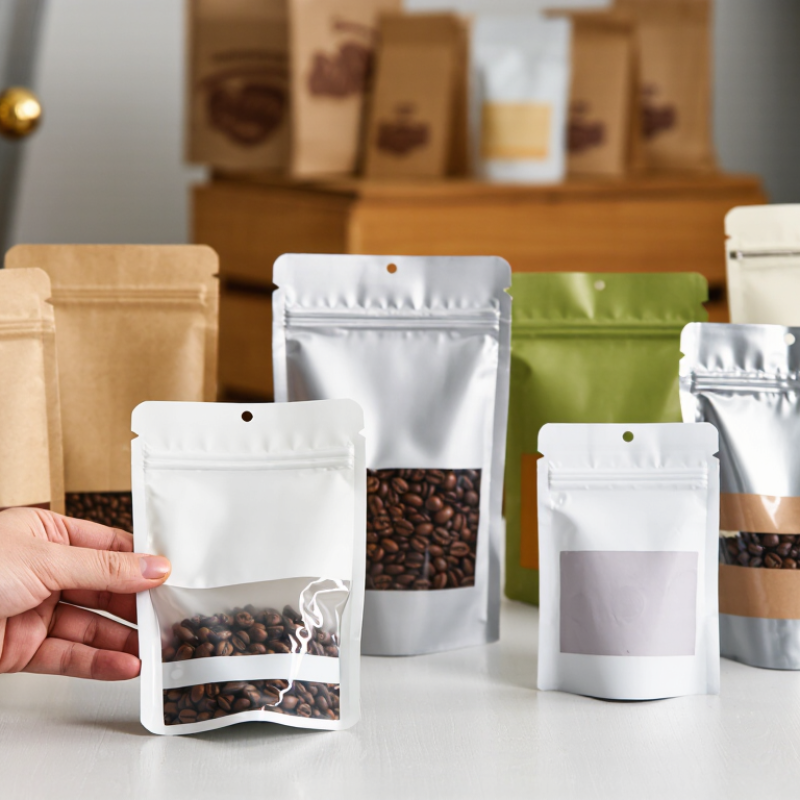
Stand-up pouches suit ground coffee and lighter retail packs. Their zipper supports repeated opening, although the seal needs testing with oily products. Quad-seal bags add four strong corners and protect shape during transport. Paper-look bags are popular, but appearance alone does not prove recyclability. Chinese factories also produce aluminum-foil laminated bags for stronger protection against light, moisture, and oxygen. Mono-material PE or PP structures may simplify recycling in suitable systems, yet local collection conditions vary.

Experienced buyers check oxygen transmission, heat-seal strength, valve performance, and print consistency before ordering. Samples should face transport simulation, not just look attractive on a table. A common production finding is zipper failure caused by trapped coffee dust. That small defect becomes expensive. Manufacturers can adjust thickness, gusset size, valve placement, and surface finish for different filling lines. Recycled content may reduce environmental impact, but it can affect stiffness and sealing. The practical answer is not always the most sustainable one. Honest testing is still necessary.

Materials and Barrier Properties for Coffee Packaging

Coffee packaging manufacturers must treat barrier design as a freshness system, not a decorative layer.

The USDA Foreign Agricultural Service forecast global coffee production at 176.2 million 60-kilogram bags for 2024/25. That volume increases pressure on packaging performance and consistency.

Roasted coffee releases carbon dioxide after roasting.

Oxygen can also accelerate aroma loss and oxidation.

High-barrier bags commonly combine polyester, aluminum foil, and polyethylene, or use metallized films.

The correct structure depends on roast level, filling temperature, storage time, and distribution humidity.

Oxygen transmission rate and water vapor transmission rate should be verified through ASTM D3985 and ASTM F1249 testing.

In practical filling trials, even a small seal wrinkle can undermine an excellent film. Seal strength matters.

The International Coffee Organization reported global coffee consumption at about 177 million 60-kilogram bags in 2023/24. Packaging suppliers therefore need scalable, repeatable specifications.

One-way degassing valves help release internal gas while limiting oxygen entry, especially in freshly roasted coffee bags.

However, stronger barriers are not automatically better.

We sometimes over-specify materials and overlook recyclability, seal contamination, or storage conditions.

A useful factory review should compare barrier data, drop resistance, seal integrity, and real shelf-life tests.

Laboratory numbers alone can mislead.

How to Evaluate Chinese Coffee Bag Manufacturers

China Top Coffee Packaging Bags Manufacturers

How to Evaluate Chinese Coffee Bag Manufacturers

Global coffee demand makes supplier screening more important than attractive photographs. The International Coffee Organization’s 2024 Coffee Report and Outlook estimates consumption at 177.9 million 60-kilogram bags in 2023/24. Grand View Research valued the global coffee packaging market at approximately US$10.3 billion in 2023. This scale increases material pressure, quality risks, and delivery expectations.

I assess Chinese manufacturers through evidence, not promises. Request food-contact declarations, migration-test results, factory audit records, and batch traceability documents. Check whether specifications cover pouch dimensions, film thickness, oxygen transmission, moisture transmission, seal strength, and valve performance. Ask for production samples from different batches. One perfect sample proves very little. I once focused too heavily on print quality and overlooked weak bottom seals. That was an expensive lesson. Confirm equipment capacity, minimum order quantities, lead times, and corrective-action procedures. A reliable factory should explain failures clearly, rather than hide behind vague certificates.

Tips: Compare at least three factories using the same technical brief. Test filled bags after transport simulation and heat exposure. Review how rejected materials are recorded. Ask for recent laboratory reports, not screenshots. Sustainable claims also need proof, because recyclable structures can perform poorly without proper barrier design. Supplier communication matters, but written specifications matter more.

Production, Customization, and Quality Control Standards

China Top Coffee Packaging Bags Manufacturers: Production, Customization, and Quality Control Standards

China’s coffee packaging industry is moving toward tighter, evidence-based production. The International Coffee Organization estimated global coffee production at about 178 million 60-kilogram bags in 2023/24. That volume increases pressure on packaging suppliers. A dependable factory should control film thickness, seal temperature, oxygen transmission, and valve performance. These details protect aroma during storage and transport. Small errors matter.

Customization usually begins with the coffee’s roast profile and distribution route. High-barrier multilayer structures can reduce oxygen and moisture exposure. However, complex layers may make recycling more difficult. The Sustainable Packaging Coalition has repeatedly highlighted this trade-off in flexible packaging development. Manufacturers should therefore compare barrier needs with end-of-life requirements. A matte surface, zipper, degassing valve, or printed batch code should serve a clear purpose. Appearance alone is not quality.

Quality control needs measurable records.

ISO 9001 supports process consistency, while food-packaging production may also follow ISO 22000 or BRCGS requirements. Testing can include seal-strength checks, migration evaluation, and accelerated shelf-life trials. ASTM-based laboratory methods add useful consistency. Independent inspection is still valuable. No factory is flawless. A practical supplier should disclose sampling plans, corrective actions, and retained samples. The Global Coffee Platform’s sustainability research also shows why traceability matters across the coffee chain. Packaging data should connect material lots with production dates, ink records, and shipment inspections. That evidence builds trust better than polished claims.

'