| Paved Trails and Easy Paths | Firm pavement, compact gravel, park paths, and well-maintained lowland trails with few obstacles. | Comfort, low weight, smooth walking, and sufficient grip without excessive stiffness. | Light hiking shoes or flexible low-cut boots with a cushioned midsole and breathable upper. | Shallow multidirectional lugs, generally about 2–3 mm, provide adequate traction and roll smoothly on hard surfaces. | Breathability is usually more valuable than full waterproofing in dry, warm conditions. | Moderate cushioning and neutral support are normally sufficient; high ankle support is rarely necessary. | Day hikes, urban-to-trail routes, and dry recreational walks. |
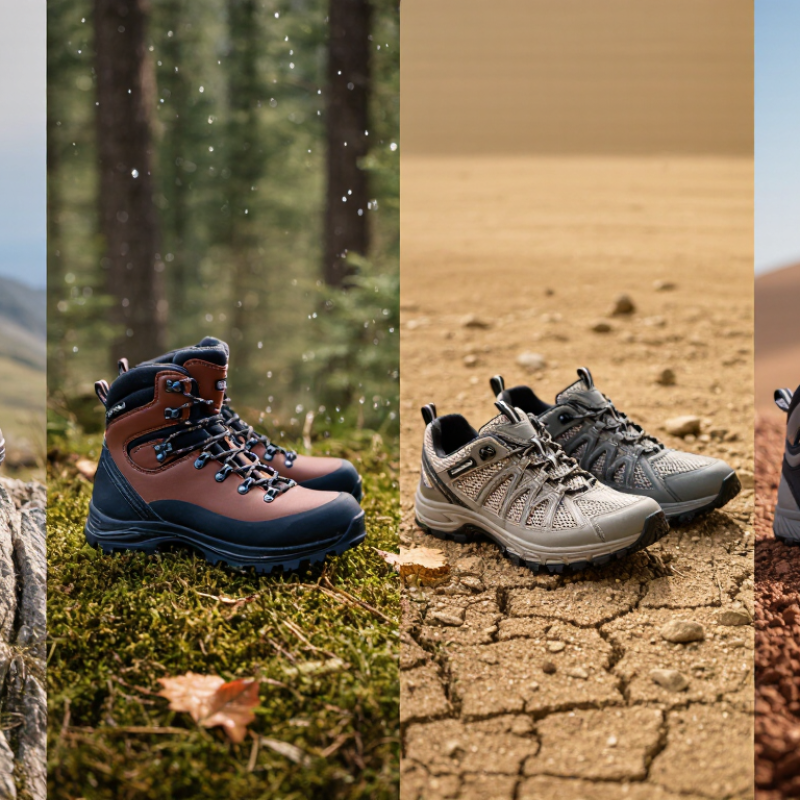
| Forest and Mixed Woodland Trails | Leaf litter, soil, roots, small stones, mud patches, and occasional wet sections. | Reliable traction, flexibility, comfort, and protection from roots and uneven ground. | Low- or mid-cut hiking boots with a reinforced toe, stable heel counter, and moderately flexible midsole. | Moderate lugs, about 3–4 mm, with varied edges help grip soil while remaining comfortable on firm sections. | Water-resistant materials are useful; waterproof membranes help in rain but may reduce ventilation. | Moderate ankle coverage and cushioning improve comfort on uneven surfaces without adding unnecessary bulk. | Regular day hikes and variable three-season woodland routes. |
| Rocky and Technical Trails | Exposed rock, sharp edges, uneven slabs, loose stones, and frequent foot placement changes. | Edge control, underfoot protection, torsional stability, and precise traction. | Supportive mid-cut or sturdy low-cut boots with a firm midsole, protective rand, and structured upper. | Firm rubber with approximately 3–5 mm lugs and defined edges supports grip and edging on rock. | Moderate weather protection is useful; excessive insulation can make technical movement less comfortable. | A secure heel, supportive footbed, and firm cushioning help reduce fatigue and protect against sharp terrain. | Experienced hikers, rugged day hikes, and technical approach-style trails. |
| Muddy and Soft Ground | Wet soil, clay, deep mud, saturated grass, and surfaces that deform underfoot. | Self-cleaning traction, stability, water resistance, and secure footing on slippery ground. | Mid- or high-cut boots with a durable upper, gusseted tongue, supportive heel, and secure lacing system. | Deep, widely spaced lugs, commonly about 4–6 mm, shed mud more effectively than closely packed shallow lugs. | Waterproof construction is valuable, but a breathable lining and moisture-wicking socks remain important. | Moderate-to-firm cushioning and increased ankle coverage help when the ground is unstable. | Wet-season hiking, boggy paths, and muddy countryside routes. |
| Steep Ascents and Descents | Sharp elevation changes, sloping trails, loose soil, rock steps, and braking forces during descents. | Traction, heel braking, climbing grip, balance, and a precise fit that prevents foot movement. | Supportive mid-cut boots with a firm heel counter, secure lacing, and a stable platform. | Directional lugs with pronounced heel braking edges, typically around 4–5 mm, support uphill and downhill movement. | Choose waterproofing according to climate; prioritize a secure fit over added weather features. | Moderate ankle support and firm heel hold are more important than plush cushioning. | Mountain day hikes and routes with sustained elevation gain or loss. |
| Scree and Loose Gravel | Unstable small rocks, loose gravel, talus, and surfaces that slide beneath the foot. | Foot stability, protection from rolling stones, precise placement, and resistance to abrasion. | Sturdy mid-cut boots with a protective toe cap, reinforced upper, and relatively firm sole. | Firm, moderately deep lugs with strong edges, about 4–5 mm, provide traction without feeling overly soft. | Durable, abrasion-resistant materials are important; waterproofing is secondary unless precipitation is expected. | Good heel containment and a stable platform help limit side-to-side movement on shifting ground. | Rocky mountain trails and routes covered with loose debris. |
| Wet Rock and Stream Crossings | Rain-soaked slabs, damp roots, shallow streams, slick stones, and frequently changing moisture levels. | Wet-surface grip, balance, quick drainage or waterproofing, and secure contact with the ground. | Low- or mid-cut boots with a well-fitting heel, flexible forefoot, and protective, quick-drying upper. | Sticky, high-friction rubber with closely controlled edges and moderate lugs, around 3–4 mm, suits rock and mixed surfaces. | For frequent immersion, fast-draining footwear may be preferable; for persistent rain, waterproof boots offer better dryness. | Moderate cushioning and a stable heel help maintain balance on slick, uneven surfaces. | Rainy trails, canyon routes, and hikes involving regular stream crossings. |
| Snow and Cold Winter Trails | Packed snow, fresh snow, icy patches, frozen soil, and low temperatures. | Warmth, insulation, traction, moisture protection, and compatibility with traction devices. | Insulated, waterproof mid- or high-cut boots with a stiff enough sole for secure movement in snow. | Deep, flexible lugs can help in snow; on ice, use compatible traction devices because ordinary lugs alone are unreliable. | Waterproofing and insulation are essential, but excessive warmth can cause sweating during strenuous climbs. | Higher ankle coverage and room for properly fitted winter socks are important; avoid a cramped toe box. | Winter day hikes, snowy forest routes, and cold-weather walking. |
| Long-Distance and Backpacking Routes | Extended mileage across mixed terrain while carrying food, water, clothing, and overnight equipment. | Load support, durability, comfort over many hours, blister prevention, and dependable weather protection. | Supportive mid- or high-cut boots with a durable upper, stable midsole, strong heel counter, and secure lacing. | Versatile 3–5 mm lugs balance grip, durability, and efficiency across multiple surfaces. | Waterproofing is useful in persistently wet climates; in hot climates, ventilation and drying speed may be preferable. | Choose cushioning and support according to pack weight, foot shape, and personal comfort rather than height alone. | Multi-day hikes and heavier-load backpacking trips. |

 '
'
