Choosing industrial curtains in 2026 requires more than comparing prices and colors. These flexible barriers can divide production zones, control dust, reduce noise, and improve temperature management. However, the right choice depends on your facility’s actual workflow, not a supplier’s attractive brochure.
Start with the working environment. A welding area may need flame-resistant fabric and carefully sealed edges. A cold-storage entrance may require insulated panels, overlapping strips, and durable tracks. In a busy warehouse, transparent PVC can improve visibility around forklifts while limiting airborne particles. Measure opening height, width, traffic frequency, and available mounting space. Small measurement errors can create large installation problems.
Material performance matters, but it is not the only concern. Check tear resistance, cleaning requirements, UV exposure, temperature range, and expected replacement intervals. Ask manufacturers for tested specifications and installation guidance. Reliable suppliers should explain limitations, not promise perfect performance. Local safety requirements must also be reviewed by qualified personnel before purchase. There is no universal best option. A heavy curtain may last longer but slow frequent movement. A lightweight design may be convenient but require earlier replacement. That trade-off deserves honest evaluation.
This guide explains how to choose industrial curtains for modern facilities. It considers productivity, worker visibility, maintenance, energy control, and long-term operating costs. Real-world conditions often differ from product samples. Review the decision after installation. Your first choice may need adjustment.
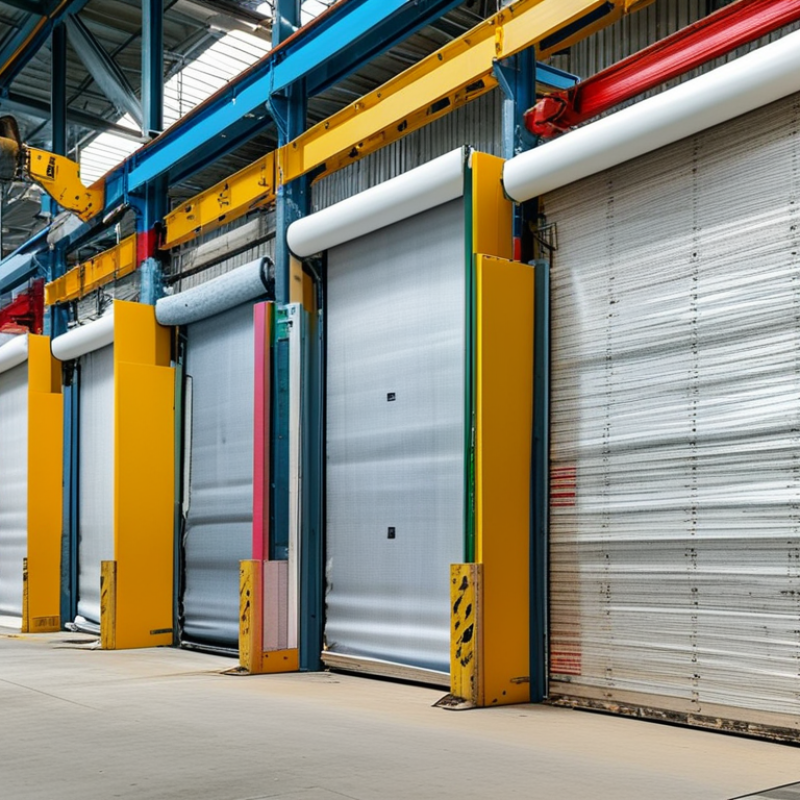
Industrial curtains are flexible barriers made from coated fabric, vinyl, mesh, or specialized transparent materials. They divide large work areas without permanent construction. Unlike rigid walls, they can open, close, slide, or roll away when operations change. They are commonly used around welding stations, grinding zones, loading bays, clean work areas, and temperature-controlled spaces. Each location needs a different curtain design. A heat-resistant curtain may suit welding, while a clear strip curtain can improve visibility near busy doorways.
In 2026, selection should begin with the actual working conditions. Check heat exposure, airflow, moisture, dust, noise, and required visibility. Measure the opening carefully, including ceiling height and floor clearance. A small error can create gaps or obstruct equipment. Material thickness, edge reinforcement, mounting hardware, and fire-performance documentation also deserve attention. Ask for test information when safety performance matters. Appearance is useful, but it should not lead the decision. I have seen planning focus too much on color and too little on cleaning access. That mistake becomes expensive later.
How to Choose Industrial Curtains in 2026?
Which Materials and Designs Fit Your Industrial Space?
Choosing an industrial curtain starts with the work happening behind it. For welding areas, coated PVC with a verified flame-resistant rating can help manage sparks and glare. For dusty workshops, heavier PVC resists tears and supports frequent cleaning. Clear panels improve visibility near loading zones. However, they may scratch faster than expected.
Mesh curtains suit spaces needing airflow, light, and basic separation. They are useful around grinding stations, storage areas, and temporary production cells. Choose a tighter mesh when small particles are a concern. Choose an open mesh when ventilation matters more. Measure the opening, ceiling height, and travel path before ordering. A curtain that drags on the floor becomes a safety problem.
Design details often decide daily performance. Sliding systems work well for wide bays, while roll-up curtains save space near busy doors. Overlapping panels reduce drafts and airborne dust. Insulated materials may support temperature control in cold rooms, but they add weight. Strong track hardware is essential for repeated movement. Check load ratings and maintenance access carefully.
Do not select by price alone. A cheaper curtain can fail at seams or mounting points. Ask for documented material performance and installation guidance. Local fire and workplace requirements still matter in 2026. Test a small section first. Real conditions can expose assumptions that product sheets miss.
How to Choose Industrial Curtains in 2026?
Matching curtain features with workplace requirements starts with observing the work area, not choosing material from a catalog. Measure opening sizes, ceiling height, traffic paths, and mounting points. Note heat, dust, moisture, noise, sparks, and airflow. A curtain near welding work may need documented flame-resistant performance. A curtain beside a loading bay may need reinforced edges and flexible movement. Clear visibility panels can improve safety around forklifts, but they may reduce privacy. The correct balance depends on daily operations.
Tips: Write down the actual problem before comparing features. Use transparent panels for supervision, opaque sections for privacy, and strip curtains where frequent movement is expected. For temperature control, select suitable thickness and sealing methods. For dusty processes, inspect overlaps and floor gaps carefully. Ask suppliers for test documents, cleaning guidance, replacement costs, and installation limits. Check local workplace requirements before approval.
A practical inspection should include operators, maintenance staff, and safety personnel. They notice different failures. Operators may dislike heavy curtains that slow movement. Maintenance teams may question difficult tracks or weak fasteners. Safety staff may require better visibility or emergency access. I have found that a perfect specification on paper can perform poorly in a busy area. Trial installation helps. Leave room for adjustment. Recheck the curtain after several weeks, because real traffic often reveals problems that measurements miss.
| Workplace Requirement | Recommended Curtain Type | Typical Material / Construction | Key Features to Match | Typical Performance Range | Best-Fit Areas | Selection Notes |
|---|---|---|---|---|---|---|
| Separate dust, sparks, or splash from nearby work areas | Opaque industrial partition curtain | PVC-coated polyester or heavy-duty vinyl fabric | Opaque surface, reinforced hems, sealed or overlapping seams, easy-to-clean finish | Common fabric weights: approximately 0.5–1.0 kg/m²; custom sizes available | Grinding, sanding, fabrication, maintenance, and assembly zones | Use a suitable ventilation and dust-control system; curtains are not a substitute for local exhaust ventilation. |
| Control welding arc radiation and welding spatter | Welding safety curtain or screen | Specialized welding curtain or screen material with a suitable shade level | Arc-radiation control, flame-resistant construction, heat and spatter resistance, stable mounting | Shade selection depends on welding process, current, distance, and applicable safety requirements | Welding cells, repair bays, metalworking areas, and training workshops | Select the shade and product classification according to a qualified safety assessment and local regulations. |
| Maintain visibility while separating people and equipment | Transparent strip curtain | Flexible clear PVC strips, commonly overlapping at the edges | High visibility, flexible pedestrian access, replaceable strips, resistance to abrasion | Common strip thicknesses: approximately 2–4 mm; overlap often selected between 50% and 100% | Loading areas, warehouses, production aisles, and temperature-controlled openings | Choose ribbed or reinforced strips where forklift traffic and frequent contact may occur. |
| Reduce drafts, airborne contaminants, and temperature exchange | Full-height thermal partition curtain | Heavy PVC-coated fabric, insulated curtain assembly, or multi-layer construction | Low air leakage, close-fitting edges, floor clearance control, durable track system | Effectiveness depends on enclosure continuity, door openings, air movement, and HVAC design | Cold rooms, hot-process areas, dock openings, and climate-controlled production spaces | For hygiene-controlled areas, confirm cleanability, chemical resistance, and compatibility with sanitation procedures. |
| Improve line-of-sight and natural light without full exposure | Semi-transparent or tinted partition curtain | Translucent PVC, tinted vinyl, or coated fabric with viewing windows | Controlled visibility, glare reduction, privacy balance, impact resistance | Light transmission varies by material, tint, and surface finish; confirm the supplier's tested value | Assembly lines, inspection areas, laboratories, and supervised work cells | Avoid transparent materials where visual privacy, arc protection, or contamination control requires an opaque barrier. |
| Protect workers from moderate noise and create focused zones | Acoustic industrial curtain | Multi-layer textile or vinyl construction with an internal sound-absorbing layer | Sound absorption, sealed overlaps, full-height installation, durable suspension hardware | Noise reduction varies widely with frequency, coverage, gaps, and room acoustics; request laboratory test data | Compressors, test stations, fabrication cells, and maintenance workshops | Curtains generally reduce reflected and transmitted noise but do not replace hearing protection or engineered noise control. |
| Withstand frequent movement, impacts, and forklift traffic | Heavy-duty modular curtain system | Reinforced PVC-coated fabric, thick flexible strips, or replaceable modular panels | Impact-resistant hardware, weighted bottom edge, replaceable sections, high-cycle track or roller system | Service life depends on traffic frequency, impact energy, temperature, and maintenance | Vehicle aisles, distribution centers, workshops, and mobile work cells | Include visible safety markings, adequate clearance, and a traffic plan to prevent collision with the support structure. |
| Meet strict hygiene and cleanability requirements | Washable hygienic partition curtain | Smooth, non-porous PVC or coated textile with welded or sealed seams | Low soil retention, chemical compatibility, smooth surfaces, removable or washable design | Chemical and temperature resistance must be confirmed against the site's cleaning agents and process conditions | Food processing, pharmaceutical support areas, clean manufacturing, and laboratories | Verify material suitability with the facility's hygiene program; a curtain alone does not create a certified cleanroom. |
| Reduce glare and limit solar heat near openings | Tinted or reflective partition curtain | Tinted PVC, reflective-coated fabric, or fabric with a light-colored exterior surface | Glare control, UV resistance, low-maintenance surface, suitable opacity | Solar-control results depend on orientation, window area, color, and installation coverage | Dock doors, inspection stations, warehouses, and work areas near exterior openings | Use measured lighting and temperature data when selecting the color and opacity rather than relying only on appearance. |
Safety should guide the first comparison. The U.S. Bureau of Labor Statistics recorded 5,283 fatal workplace injuries in 2023. A curtain cannot remove every hazard, but it can separate welding sparks, dust, noise, and moving work areas. Check flame-spread test evidence, not vague “fire-resistant” wording. NFPA 701 provides recognized textile and film testing methods. Ask for the actual test standard and fabric construction.
Durability depends on the environment. Coated fabrics should resist abrasion, oils, moisture, and ultraviolet exposure. ASTM D751 evaluates coated-fabric properties, including tensile strength and tear resistance. ISO 4892-3 addresses accelerated weathering using fluorescent UV lamps. Those results help, but they do not perfectly predict a busy factory. Inspect the lower edge, eyelets, seams, and wheels. Small failures usually start there. I have seen strong panels fail because tracks collected metal dust.
Installation changes daily usability. Ceiling-mounted tracks save floor space and suit permanent partitions. Freestanding frames allow relocation but need stable bases and careful anchoring. Roll-up systems work near forklifts, although their mechanisms require more maintenance. Measure opening width, ceiling height, traffic lanes, and ventilation before ordering. Leave enough overlap to control light and sparks, but avoid loose fabric near rotating equipment. This step is often rushed. It should not be. A clear maintenance schedule should cover washing, seam checks, track cleaning, and replacement intervals.
How to Choose Industrial Curtains in 2026? The budget answer begins with the problem, not the fabric. A low-cost curtain can fail quickly under heat, forklifts, oil, or repeated washing. The U.S. Department of Energy’s Manufacturing Energy and Carbon Footprints report identifies process heating as a major manufacturing energy-use category. A properly fitted thermal curtain may reduce air movement between zones, but it cannot replace ventilation or insulation.
Measure the opening width, height, temperature range, traffic frequency, and cleaning method. Then compare total ownership cost. Include rails, overlaps, floor clearance, repairs, and replacement panels. In my experience, buyers often focus on price per square metre. That is an incomplete calculation. A stronger specification usually costs more upfront, yet damaged panels can create larger operating losses. Still, thicker is not always better. Heavy curtains may slow workers and complicate emergency access.
Noise also deserves attention. NIOSH uses 85 dBA as an eight-hour time-weighted exposure limit in its occupational noise criteria. Acoustic curtains can reduce sound transfer, but their performance depends on gaps, ceiling height, and installation quality. Ask for tested acoustic ratings, temperature limits, flame-performance documentation, and warranty conditions. Do not accept vague claims. I would request two comparable quotations and inspect a sample seam before ordering. That small step feels excessive, but it can reveal weak stitching, poor visibility, or unsuitable wheels before the budget is committed.
Indicative material cost by industrial curtain type
PVC strip curtains are typically the most budget-friendly option for temperature separation and dust control. Insulated curtains cost more but can reduce heat transfer, while acoustic and welding curtains require specialized materials for noise reduction or spark protection. The figures are practical 2026 planning ranges in USD per square foot for materials only; final costs depend on size, thickness, hardware, installation, and local labor.
We now offer custom-made commercial vehicle tarps, along with the ability to design your own curtains, noise panels, and strip doors—tailored to your exact needs!
At Singer Safety, we specialize in manufacturing high-performance tarps engineered to safely secure and protect your vehicle loads during transport.