Selecting Teak Plywood for global projects requires more than choosing an attractive brown surface. The material must perform across changing climates, transport conditions, and installation environments. A panel that looks excellent in a showroom may warp after weeks in humid storage. That difference matters.
Experienced buyers examine the teak veneer, core construction, adhesive type, thickness tolerance, and moisture content. They also request production samples, test reports, and traceable sourcing documents. A close inspection may reveal uneven grain, open joints, or weak bonding between layers. These details can affect marine interiors, luxury furniture, doors, wall panels, and outdoor structures. The right supplier should explain how panels are pressed, dried, graded, packed, and inspected. Clear answers build confidence.
Global specifications are rarely identical. One project may require low-emission adhesive, while another prioritizes weather resistance or a specific fire-performance classification. Confirm the destination market’s applicable standards before placing a large order. Do not rely only on a product name. Teak Plywood can vary widely in veneer quality and core stability. I have seen attractive samples hide inconsistent inner layers; that is an uncomfortable but useful warning. Small tests are worthwhile. Check sanding quality, screw holding, edge strength, and surface reaction to moisture. Also review container packaging, pallet protection, and replacement procedures. These practical points often receive less attention than price, yet they can determine the project’s final cost and reputation. Choose evidence over promises, and leave room to question your first impression.
Teak plywood combines a decorative hardwood face with layered wood construction. Its warm brown color, oily texture, and natural durability suit yacht interiors, outdoor furniture, doors, wall panels, and high-end hospitality spaces. However, teak does not automatically mean marine grade. Choose panels with uniform veneers, balanced cores, and documented exterior bonding. The USDA Forest Products Laboratory reports teak specific gravity commonly ranges from about 0.55 to 0.70, depending on origin and testing method. That variation affects weight, machining, and fastening.
Global projects also require traceable sourcing. The FAO Global Forest Resources Assessment 2020 recorded 4.06 billion hectares of forest worldwide and estimated 420 million hectares were lost between 1990 and 2020. This makes plantation origin, chain-of-custody records, and harvest documentation practical selection criteria, not decorative paperwork. ITTO market reports also emphasize legality verification and transparent tropical timber supply chains. Ask for species declarations, adhesive class, formaldehyde information, and test results before ordering.
Application changes the specification. Interior wall panels may need stable, fine-faced sheets with low-emission adhesives. Exterior furniture needs stronger weather resistance, sealed edges, and careful moisture control. Marine interiors demand consistent bonding and low void content, but certification requirements vary by vessel and country. Check them early. A sample panel should be inspected after cutting, sanding, and repeated humidity exposure. Small defects often appear only then. I would not rely on appearance alone; teak’s oil can reduce coating adhesion, and even attractive plywood may fail when the core or glue line is weak.
When choosing teak plywood for global projects, inspect the core before admiring the surface. A smooth teak face can hide gaps, overlaps, or weak glue lines inside. Ask for cross-section photos and recent production samples. Check whether the veneers are evenly layered and firmly bonded. Tap the panel lightly. A hollow sound may indicate internal voids. Moisture content should suit the installation environment, especially in humid coastal regions. Small differences matter.
Grade should match the panel’s final use, not only its appearance. Clear teak faces suit visible furniture, doors, and premium interior work. Lower face grades may work behind laminates or inside protected structures. Confirm thickness tolerance, sanding quality, and edge integrity. Request bond-strength, bending, shear, and moisture-resistance test reports where performance is critical. The reports should state the testing method and production batch. I have seen attractive samples fail after cutting because the core was inconsistent. Appearance is not evidence enough.
Certification requirements vary by destination and project contract. For responsibly sourced timber, verify the certification scope, certificate validity, and chain-of-custody details. Emission requirements may also apply to plywood panels, depending on the market. Ask whether the declared grade covers the whole panel or only its teak face. Keep purchase records, inspection photos, and batch references. That paperwork supports traceability. It also exposes weak assumptions before shipment. No checklist is perfect. Experienced buyers still recheck the core, especially when samples and mass production differ.
Formaldehyde-emission limits are one measurable part of plywood certification review. Lower values indicate stricter emission requirements. Always verify the declared product test method, core construction, bonding class, thickness tolerance, and chain-of-custody documentation before approval.
How to Choose Teak Plywood for Global Projects?
Matching teak plywood to site conditions is more reliable than choosing by appearance alone. Start with moisture exposure, temperature changes, ventilation, and expected loading. A covered yacht interior needs different specifications from an outdoor staircase near saltwater. Confirm the required thickness, core construction, face veneer grade, and bonding class before ordering. Thin sheets may look elegant, but they can flex under poorly supported panels.
I once saw a beautiful teak surface fail because the plywood core absorbed moisture at exposed edges. The lesson was simple. Edge sealing matters. Ask for technical data, production batch records, and test results for bonding strength and formaldehyde emissions. For humid or coastal projects, select panels designed for prolonged moisture exposure, then verify machining tolerances. Check sheet flatness too. Warped panels create installation problems and unnecessary waste.
Tips: Compare the plywood specification with the actual climate, not the project brochure. Leave suitable acclimatization time before installation. Measure moisture content on delivery. Protect unfinished edges, drillings, and cut-outs. If the supplier cannot explain the core material clearly, pause the purchase. Independent inspection may cost more, but it can reveal weak bonding, uneven veneers, or inconsistent thickness before shipment. Specifications are useful, but site feedback should refine them.
| Project Condition | Typical Application | Recommended Teak Plywood Construction | Suitable Thickness | Face and Back Requirements | Bonding and Durability Requirements | Key Inspection Points | Specification Rationale |
|---|---|---|---|---|---|---|---|
| Dry interior environment | Wall panels, ceilings, cabinetry, furniture, interior doors and decorative partitions | Multi-ply hardwood core with a teak decorative face veneer; balanced construction on both sides is preferred | 6–18 mm, selected according to span, fixing method and stiffness requirements | Uniform teak grain, stable color, limited open defects and a smooth sanded surface suitable for clear coating | Interior-grade bonding may be suitable where the panel remains dry and protected from condensation | Check panel flatness, veneer thickness, core gaps, sanding quality, formaldehyde class and moisture content | Dry interiors require appearance and dimensional stability more than maximum weather resistance |
| Humid interior environment | Bathrooms, kitchens, spas, laundry areas and buildings with seasonal humidity changes | Hardwood plywood with cross-laminated veneers and a water-resistant adhesive system | 9–18 mm for panels; 18–25 mm for shelving, worktops or heavily loaded components | Teak face should be well bonded, fully sanded and sealed on exposed edges and cut-outs | Use moisture-resistant bonding; provide ventilation and protect the panel from standing water | Inspect edge sealing, veneer lifting, bubbling after moisture exposure and dimensional changes after conditioning | Teak has good natural durability, but the plywood panel still depends on adhesive quality and edge protection |
| Covered exterior | Covered balconies, sheltered walkways, exterior soffits, entrance canopies and protected outdoor furniture | Exterior plywood with durable hardwood core and teak face veneer; faces should be suitable for protective coating | 9–21 mm, depending on framing spacing and wind or handling loads | Weather-resistant face veneer with tight repairs, consistent sanding and sealed panel edges | Exterior bonding, normally tested against relevant plywood performance requirements; use a UV- and moisture-resistant finish | Check glue-line integrity, face checking, edge absorption, coating compatibility and storage exposure before installation | Covered locations reduce direct weathering but still experience humidity, condensation and temperature cycling |
| Fully exposed exterior | Uncovered façades, outdoor doors, exterior furniture, signs and architectural features exposed to rain and sunlight | Exterior-grade plywood with a carefully selected teak face; structural design should not rely only on the teak veneer | 12–25 mm, based on support spacing, wind load and required service life | Low-defect, well-jointed face with sealed edges, protected end grain and a coating system maintained according to exposure | Use weather-resistant bonding and a complete finishing system; avoid unprotected horizontal surfaces where water can pond | Verify weathering classification, face-joint quality, edge sealing, coating adhesion and panel movement allowances | Teak improves surface durability, but direct weather exposure can still cause checking, color change and moisture movement |
| High humidity with frequent wetting | Pool areas, coastal interiors, wash-down zones and installations near splash water | Exterior or marine-type plywood construction with fully bonded veneers and protected edges | 12–25 mm for cladding, furniture and panels; thicker sections may be required for structural use | Closed, well-finished teak face; all edges, penetrations and joints must be sealed against water entry | Use durable exterior bonding and a coating system compatible with repeated wetting and drying cycles | Check for core voids, glue-line gaps, edge swelling, screw-holding condition and water drainage details | Repeated wetting stresses the core and adhesive lines more severely than occasional atmospheric humidity |
| Marine or near-marine use | Boat interiors, deck furniture, cabin joinery, cockpit panels and non-critical marine fittings | Marine-grade or equivalent high-durability plywood with teak face veneer and controlled core quality | 9–25 mm, determined by marine design loads, support spacing and fastening details | Consistent teak face, minimal core defects, sealed edges and a finish suitable for saltwater exposure | Specify a suitable marine performance standard where applicable; use corrosion-resistant fasteners and drainage details | Review water-resistance test evidence, veneer bonding, core voids, panel weight, flatness and traceability | Marine conditions combine moisture, salt, vibration and movement; decorative appearance alone is not sufficient |
| Structural flooring or heavy loading | Platforms, vehicle interiors, transport floors, worktops and load-bearing panels | Structural plywood with a teak wear or decorative face only when the engineered panel meets the design load | 18–30 mm is common for heavily loaded panels, but structural calculations are required | Face grade should match wear, appearance and slip-resistance needs; use textured or protected surfaces where necessary | Specify the required structural class, bending strength, stiffness, shear performance and service environment | Check span tables or calculations, panel grade, thickness tolerance, screw holding, impact resistance and deflection | Teak veneer does not automatically make a panel structural; core construction and tested performance control load capacity |
| Hot and dry climate | Desert buildings, sun-exposed interiors, transport cabins and projects with strong day-night temperature changes | Dimensionally stable, balanced plywood with carefully dried veneers and a suitable protective finish | 9–21 mm for most architectural panels; select thicker panels where thermal movement or spans are significant | Uniformly sanded teak face with sealed edges and a finish containing suitable UV protection | Allow for movement at joints; avoid dark, unventilated assemblies that can create excessive surface temperatures | Measure moisture content before installation, inspect panel flatness and confirm finish compatibility with heat and UV exposure | Rapid temperature and humidity changes can cause cupping, joint opening and finish failure even in durable wood species |
| Cold climate or freeze-thaw exposure | Seasonal exterior construction, cold-storage surroundings and projects with repeated freezing and thawing | Exterior plywood with durable bonding, sealed edges and a design that prevents water retention | 12–25 mm, depending on structural support and movement allowances | Stable face veneer, sealed cut edges and a flexible protective coating system suitable for low temperatures | Use exterior bonding and detail joints for drainage; avoid trapping moisture behind impermeable finishes | Check freeze-thaw resistance evidence where required, edge swelling, coating flexibility and installation clearances | Water trapped in the panel can expand during freezing and accelerate delamination or surface damage |
| Low-emission building project | Schools, hospitals, offices, residences and certified green-building interiors | Teak-faced plywood with documented emissions performance and responsible timber sourcing documentation | 6–21 mm, selected according to the application and project specifications | Low-defect decorative face with a finish meeting the project’s indoor-air-quality requirements | Request formaldehyde emission classification, product declarations and chain-of-custody documentation where required | Review test reports, production batch information, emissions class, coating VOC data and documentation validity | Global projects may require both technical performance and environmental documentation for approval |
| International shipping and remote installation | Projects with long ocean transport, multiple customs jurisdictions or installation far from the manufacturing site | Specification-controlled panels packed with moisture protection and supplied with consistent dimensions and batch records | Use the project-approved thickness; common architectural selections are 9, 12, 15, 18 and 21 mm | Protect faces with separators or suitable packaging; prevent abrasion, direct rain and prolonged container condensation | Use moisture-resistant packaging, corner protection and clear handling instructions; acclimatize panels before installation | Record panel dimensions, moisture content, quantity, batch identification, packaging condition and delivery damage | Transport conditions can change panel moisture content and cause damage even when the original plywood is correctly manufactured |
Choosing teak plywood for global projects requires more than comparing the sheet price. Supplier verification should include veneer thickness, core species, moisture resistance, formaldehyde class, and test reports. Ask for recent batch photographs and independent laboratory results. Small details matter.
The FAO Global Forest Resources Assessment 2020 estimates that forests cover 31% of global land area. That figure does not prove responsible sourcing. Request legal-harvest documents and chain-of-custody evidence for teak and core materials. For European shipments, check current deforestation-free product requirements. Requirements and enforcement dates can change. I would not trust a generic “export quality” claim alone.
Shipping can quietly erase a low purchase price. Compare the delivered cost, including packing, inland transport, ocean freight, insurance, customs brokerage, duties, and storage. UNCTAD’s Review of Maritime Transport highlights continuing exposure to freight disruption and port delays. Build a buffer. A damaged pallet is expensive. The World Bank Logistics Performance Index 2023 evaluates customs, infrastructure, shipment pricing, tracking, and delivery reliability; use these categories when comparing exporting countries. Confirm the correct HS classification, commonly within plywood heading 4412, with the destination customs authority. Import duty, wood legality checks, fumigation rules, and phytosanitary documents may differ by port. One practical weakness remains: suppliers often quote different panel tolerances, making cost comparisons unfair. Use one written specification, including dimensions, grade, glue standard, packaging, and inspection timing, before requesting offers.
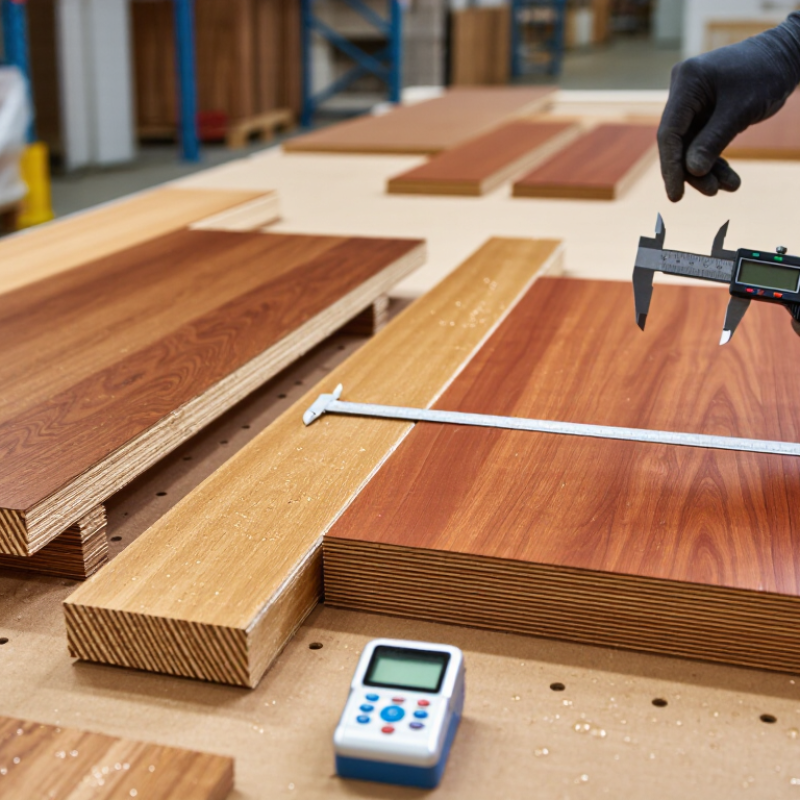
Inspecting samples is more reliable than trusting a product sheet. Request panels from the intended production batch, not only showroom pieces. Check veneer thickness, core gaps, glue lines, surface repairs, and edge alignment under direct light. Measure thickness at several points with a caliper. Small differences can become serious during installation.
Moisture performance deserves closer attention. The USDA Forest Products Laboratory’s Wood Handbook explains that wood expands and contracts as moisture content changes. Therefore, test samples after conditioning, soaking, drying, and repeated humidity exposure. Record thickness swelling, delamination, warping, and surface cracking. ASTM D1037 provides widely used methods for evaluating wood-based panels. Ask the supplier for test conditions, sample sizes, and failure limits. Numbers without test details are weak evidence.
Traceability also affects long-term confidence. The FAO Global Forest Resources Assessment 2020 reported about 420 million hectares of forest loss from 1990 to 2020. Responsible sourcing should include species documentation, harvest information, and chain-of-custody records. Confirm these documents before approving a global shipment. Compare screw holding and edge durability after cutting, because construction sites rarely resemble laboratories. That part is often overlooked. If one sample performs well, repeat the test across several panels and production dates. A single perfect sheet proves very little. Inspect exposed edges after transport simulation, especially where containers face changing humidity and temperature. Document every result with photographs, measurements, and batch numbers.
We now offer custom-made commercial vehicle tarps, along with the ability to design your own curtains, noise panels, and strip doors—tailored to your exact needs!
At Singer Safety, we specialize in manufacturing high-performance tarps engineered to safely secure and protect your vehicle loads during transport.