Sourcing Vintage Military Boots worldwide requires patience, historical knowledge, and disciplined verification. These boots may come from estate sales, specialist dealers, military surplus shops, or carefully documented online auctions. Each channel carries different risks. A polished photograph cannot reveal hidden leather rot, replaced soles, or incorrect markings.
Footwear historian Jonathan Walford once said, “A shoe can preserve the history of its wearer.” That idea matters here. Stitching patterns, heel shapes, eyelets, maker stamps, and contract dates can reveal whether a pair is genuinely vintage. Experienced buyers compare several photographs before making decisions. They inspect the tongue, inner lining, welt, and outsole closely. A faint factory code may matter more than attractive patina.
Reliable sourcing also means checking sellers, return policies, shipping conditions, and import requirements. Laws differ between countries, especially when old leather, animal materials, or restricted historical items are involved. Ethical sellers provide clear provenance and avoid misleading military claims. They should describe repairs honestly. “Unissued” should never mean “looks clean.”
Small details matter.
Condition grading remains subjective. Even specialists can disagree about originality or restoration. That uncertainty deserves acknowledgment. A buyer may find an excellent pair, then discover stiff leather after delivery. Measuring the insole is safer than trusting the marked size. Asking for natural-light images can prevent expensive mistakes.
The strongest worldwide sourcing strategy combines research, patience, and restraint. Vintage Military Boots are not merely fashion objects. They are manufactured records, shaped by labor, climate, storage, and time. A careful purchase respects that history while remaining practical, legal, and transparent.
How to Source Vintage Military Boots Worldwide
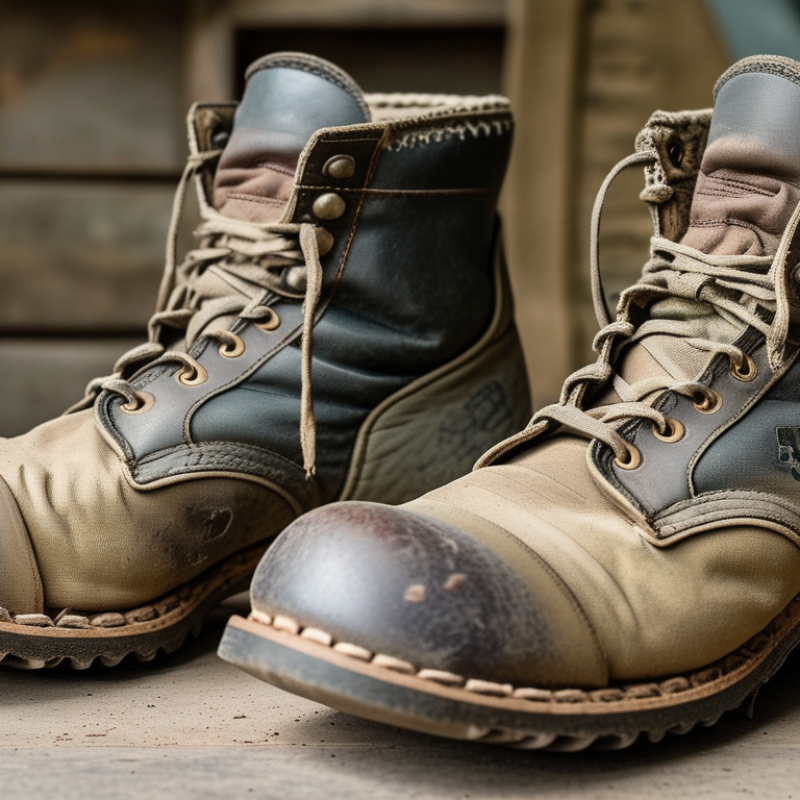
Vintage military boots reflect changing warfare, materials, and field conditions. Earlier pairs often used full-grain leather, stitched soles, brass eyelets, and heavy cotton laces. Later designs introduced rubber compounds, molded soles, and lighter synthetic panels. These changes followed practical needs: marching distance, wet terrain, maintenance time, and production cost.
The historical context matters. A 1940s service boot may show thick leather, blunt toes, and wide welting. A later cold-weather model may include insulation, deep tread, or sealed seams. Look for construction details before relying on age claims.
Allied Market Research valued the military footwear market at about USD 1.7 billion in 2021.
Its forecast also expects continued growth through 2031. That demand increases interest in older, well-documented footwear.
Condition requires professional judgment. Check the sole edge, heel compression, stitching, eyelets, and interior lining. Cracked leather can look attractive but may fail after limited walking. Rubber can harden, even when the boot appears clean.
A 2023 Grand View Research report identified durability and protective performance as major military footwear priorities. That finding explains why genuine field boots often feel heavier than modern fashion versions.
Worldwide sourcing adds uncertainty. Measurements vary between historical sizing systems. Photographs can hide repairs, odor, and dry rot. I have learned that provenance is useful, but construction evidence is stronger.
Some date estimates remain imperfect. A careful record should state what is known, what is probable, and what still needs verification.
Reliable worldwide sources for vintage military boots usually begin with established surplus dealers, specialist footwear shops, and reputable auction platforms. Look for sellers who describe storage conditions, production dates, sizing systems, and material details clearly. A serious seller will provide close photographs of the soles, stitching, eyelets, insoles, and interior markings. Clear evidence matters.
Ask where the boots were acquired. Responsible dealers should explain whether the pair came from a lawful surplus sale, private collection, or estate inventory. Check the seller’s trading history, customer feedback, return policy, and contact information. Specialist sellers often understand regional sizing differences and can explain whether leather has hardened from poor storage. That knowledge is valuable. General marketplaces may offer lower prices, but descriptions can be incomplete or careless.
Before ordering internationally, confirm customs requirements, shipping restrictions, and import taxes in your country. Purchase only items that can be legally sold and transported. Request measurements in centimeters, not only a labeled size. Compare heel width, shaft height, and insole length with a pair you already own. I once trusted a familiar size and received boots with a surprisingly narrow toe box. The mistake was mine, but the seller’s measurements were also vague. No checklist is perfect. Still, detailed questions, dated photographs, and patient communication reduce avoidable risks. If a seller refuses basic documentation or pressures you to pay quickly, keep searching. Reliable specialists do not need secrecy to make a sale.
Sourcing vintage military boots worldwide takes patience, not just a search engine. I begin with reputable dealers, estate sellers, and documented surplus auctions. Ask for sharp photos of the soles, eyelets, stitching, labels, and interior. Authentic pairs often show consistent construction and period-appropriate materials. Still, replicas can look convincing. Compare several references before deciding. A replaced sole may hide the original age.
Tips: Request the exact measurements, not only the marked size. Check the insole length, ball width, heel width, and shaft height. Ask whether the leather was dyed, repaired, or treated. Search for inventory marks, dated paperwork, unit references, or release records. A seller’s story is not proof. No paperwork, no certainty. Missing provenance should lower your confidence and your offer.
Condition matters as much as history. Examine cracks around flex points, hardened leather, loose stitching, mildew, and uneven wear. Smell can reveal damp storage. Old sizing varies, so compare measurements with a pair that fits you. Ask about returns, especially when buying across borders. Pack boots dry and follow all import requirements. I once trusted attractive photographs and overlooked compressed soles. That mistake changed how I inspect every pair. No method is perfect. Honest uncertainty is better than invented history.
Sourcing vintage military boots worldwide starts with a comparable price sheet. Record the boot price, currency conversion, seller location, and visible repairs. A cracked sole can erase a bargain quickly. I check stitching, heel wear, odor, and internal size markings. My judgment is not perfect. Photos often hide hardened leather.
Shipping may cost more than expected. The Pitney Bowes Parcel Shipping Index reported 161.1 billion parcels worldwide in 2022, showing how complex cross-border delivery has become. Compare tracked postal service, courier, and consolidated freight. The cheapest option may offer weak claims protection. The World Bank’s 2023 Logistics Performance Index evaluates customs, infrastructure, tracking, and delivery timeliness. These factors matter when a parcel crosses several borders.
Customs officers usually assess the item’s declared value, shipping cost, material, and origin. A clean commercial invoice should describe used footwear accurately, without vague wording. Import taxes differ by destination, tariff code, and taxable base. For example, some European shipments under EUR 150 may use an import VAT collection system, while other destinations apply duties at arrival. Thresholds and exemptions can change. Check the destination customs authority before payment, not after dispatch. Keep the invoice and payment record. That small habit prevents expensive arguments.
Indicative comparison for one pair of vintage military boots in wearable condition. Prices and shipping costs are typical market ranges in USD, excluding duties and taxes. Actual costs vary by size, condition, packaging, seller location, carrier, declared value, and destination.
| Sourcing Region | Common Vintage Boot Types | Typical Pair Price | Economy Shipping | Express Shipping | Typical Transit Time | Main Advantages | Main Risks |
|---|---|---|---|---|---|---|---|
| United Kingdom | Leather combat boots, parade boots, cold-weather boots | $35–$180 | $25–$65 | $75–$180 | Economy: 7–20 days Express: 2–6 days | Large second-hand market; many older leather styles; broad size availability | Condition can differ significantly; export postage may be expensive for heavy pairs |
| Continental Europe | Leather field boots, tanker boots, cold-climate footwear | $30–$170 | $20–$60 | $70–$170 | Economy: 5–18 days Express: 2–5 days | Good access to European military surplus and regional postal networks | Sizing systems differ; some sellers provide limited English-language information |
| North America | Combat boots, jump boots, jungle boots, training boots | $40–$220 | $25–$75 | $80–$190 | Economy: 7–25 days Express: 2–7 days | Strong supply of rugged leather and tropical-condition boots; detailed listings are common | Older rubber soles may crack; domestic prices can be higher for rare sizes |
| Eastern Europe | Leather marching boots, field boots, winter boots | $25–$140 | $30–$85 | $90–$220 | Economy: 10–30 days Express: 3–8 days | Potentially lower purchase prices; distinctive historical construction and materials | Longer delivery routes; documentation and tracking quality can vary |
| Japan and South Korea | Leather service boots, field boots, cold-weather boots | $60–$260 | $35–$90 | $90–$230 | Economy: 8–22 days Express: 2–6 days | Careful product photography; strong preservation and collectors’ market | Higher prices for well-preserved pairs; local sizing may require conversion |
| Australia and New Zealand | Leather field boots, desert boots, mounted and parade boots | $45–$210 | $35–$100 | $100–$250 | Economy: 10–30 days Express: 3–8 days | Good access to boots suited to warm and dry climates; English-language measurements are common | High international postage; biosecurity inspection can delay used footwear |
| South America | Leather marching boots, riding boots, field boots | $30–$160 | $35–$110 | $100–$260 | Economy: 12–35 days Express: 4–10 days | Distinctive leather styles; sometimes competitive local purchase prices | Fewer international shipping options; customs clearance may take longer |
| South Asia | Leather parade boots, ankle boots, field-style boots | $25–$130 | $30–$90 | $85–$220 | Economy: 10–30 days Express: 3–8 days | Lower entry prices; traditional leatherworking skills and unusual patterns | Confirm whether an item is genuinely vintage or newly made in a vintage style |
| Destination Market | Typical Consumption Tax | Duty Treatment for One Pair | Customs Value Usually Considered | Used-Footwear Requirements | Practical Import Notes |
|---|---|---|---|---|---|
| United States | No federal VAT; state and local sales tax may apply | Duty depends on material, construction, origin, and tariff classification; low-value shipments may qualify for simplified entry, subject to current rules | Usually the transaction value, with certain additions; shipping treatment depends on entry rules | Clean footwear and accurate material description are important | Do not assume every low-value parcel is tax-free; classification and current de minimis policy should be checked before purchase |
| United Kingdom | 20% VAT is the standard rate | Import duty may apply above the applicable low-value threshold or where no relief is available; rate varies by commodity code and origin | Generally goods value plus relevant transport and insurance costs to the import point | Used boots should be free of soil, plant matter, and untreated biological contamination | VAT, duty, and carrier handling fees can be collected before or at delivery |
| European Union | VAT commonly ranges from 17% to 27%, depending on the member state | Import duty depends on footwear material, sole construction, origin, and customs classification; low-value VAT arrangements may apply | Customs value generally includes the price plus transport and insurance to the EU border | Clean used footwear is normally required; national biosecurity rules may add conditions | VAT is generally payable on commercial imports, even when customs duty is zero or relieved |
| Canada | GST/HST or applicable provincial tax; rates vary by province | Duty depends on tariff classification and country of origin; postal and courier thresholds differ | Usually the declared transaction value, with applicable transportation and insurance adjustments | Footwear should be clean and free of soil and organic residue | A courier may charge brokerage or advancement fees in addition to government taxes |
| Australia | 10% GST | Duty varies by footwear type and origin; low-value imported goods may be subject to GST collection at checkout or import | For higher-value imports, customs value and transport, insurance, duty, and GST rules may all be relevant | Strict biosecurity controls; boots must be thoroughly clean and may be inspected or treated | Soil, seeds, animal material, and heavy organic residue can cause delays, treatment, re-export, or disposal |
| New Zealand | 15% GST | Duty depends on classification and origin; low-value GST and customs processing rules may apply | Declared value plus relevant freight and insurance components under customs valuation rules | Very clean footwear is essential because of biosecurity controls | Buyers should request professional cleaning before dispatch and retain photos of the cleaned soles |
| Japan | 10% consumption tax | Duty depends on material, footwear construction, origin, and tariff classification; personal imports may receive simplified treatment | Customs value generally includes the declared price and applicable freight or insurance components | Used shoes should be clean and accurately described | A Japanese-size conversion and precise foot measurements reduce return and clearance problems |
| Singapore | 9% GST | Most ordinary footwear is generally not subject to excise duty, but GST and customs procedures still apply | Imported value typically considers the goods value and relevant freight or insurance components | Clean footwear and a clear used-goods description are recommended | The courier or postal operator may collect GST and an administrative handling charge |
| Cost Element | Typical Range or Formula | What to Check Before Buying |
|---|---|---|
| Boot purchase price | $25–$260 per pair | Actual measurements, sole condition, cracks, odor, repairs, missing eyelets, and whether the pair is genuinely used |
| Packaging | $0–$15 | Request a compact, moisture-resistant package without unnecessary retail packaging |
| International shipping | Usually $20–$110 by economy service; $70–$260 by express service | Compare dimensional weight, tracking, insurance, delivery duties, and remote-area surcharges |
| Import duty | Varies by destination, origin, leather or textile content, sole material, and tariff code | Confirm the destination tariff code with the customs authority or a licensed broker |
| VAT, GST, or sales tax | Often calculated on goods value plus shipping, insurance, and any applicable duty | Check whether tax is collected at checkout or by customs on delivery |
| Brokerage and handling | $0–$40 or more, depending on the carrier and entry method | Ask whether customs clearance, disbursement, storage, and remote-delivery fees are included |
| Estimated landed cost | Purchase price + packaging + shipping + duty + consumption tax + handling fees | Use the total landed cost rather than the listing price when comparing countries |
Customs duties, tax thresholds, biosecurity requirements, and low-value import schemes can change. Verify the current rules with the destination customs, tax, and biosecurity authorities before placing an order.
Sourcing vintage military boots worldwide requires more than finding an attractive, worn-in pair. Verify the seller’s location, ownership history, materials, and export documents. Some jurisdictions regulate military property, insignia, protected animal materials, or controlled goods. Check customs rules in both countries before paying. A seller’s vague origin story is a warning sign. The paper trail matters.
Ethics also depends on use, condition, and supply-chain transparency. The International Labour Organization, Walk Free, and the International Organization for Migration estimated 27.6 million people were trapped in forced labour in 2021. That figure supports careful sourcing, even for second-hand products. WRAP’s Valuing Our Clothes report found that extending clothing life by nine months can reduce carbon, water, and waste footprints by about 20–30%. Still, I would not call every old pair sustainable. Shipping, repairs, chemical treatments, and returns can erase some benefits. Inspect soles, stitching, lining, and odor through clear photographs. Fit is evidence. Ask for measured insole length, not only a marked size.
Tips: Request dated photos of the outsole, heel, tongue, and internal label. Confirm whether leather is ordinary bovine leather or a restricted material. Use a payment method with buyer protection. Keep invoices and import records. If the boots smell strongly of fuel, chemicals, or mold, walk away. A cheaper pair may become expensive after resoling, cleaning, and international return shipping.
We now offer custom-made commercial vehicle tarps, along with the ability to design your own curtains, noise panels, and strip doors—tailored to your exact needs!
At Singer Safety, we specialize in manufacturing high-performance tarps engineered to safely secure and protect your vehicle loads during transport.