
What Is a Plush Toy Factory and How Does It Work?
A Plush Toys Factory turns sketches, fabric, filling, and safety requirements into a soft product for children and collectors. The process begins with design approval, material selection, pattern cutting, stitching, stuffing, facial embroidery, inspection, and careful packing. A sample may look simple, yet its seams, eyes, stuffing density, and labels require repeated checks. Small details matter.
Grand View Research reported that the global stuffed and plush toys market was valued at approximately USD 7.1 billion in 2023. Its report also projects continued growth through 2030, supported by gifting, character licensing, and online retail. These figures show opportunity, but they do not guarantee factory success. Demand can change quickly. A popular character today may become unwanted next season.
Steve Pasierb, president and CEO of The Toy Association, has stated, “Play is a child’s work.” His observation helps explain why responsible plush production demands more than attractive design. Manufacturers must control fiber quality, secure attachments, flammability risks, and age-related hazards. They also need traceable inspections and reliable supplier records. Standards such as ASTM F963, EN 71, and ISO 8124 often guide these controls, depending on the destination market.
This guide examines how a Plush Toys Factory operates, from prototype tables to final cartons. It also considers production costs, quality assurance, sustainability, and communication between brands and manufacturers. Factories are not perfect machines. Misaligned embroidery, uneven filling, or unclear specifications can still occur. The strongest factories acknowledge those weaknesses and improve their process through testing, worker experience, and honest review.
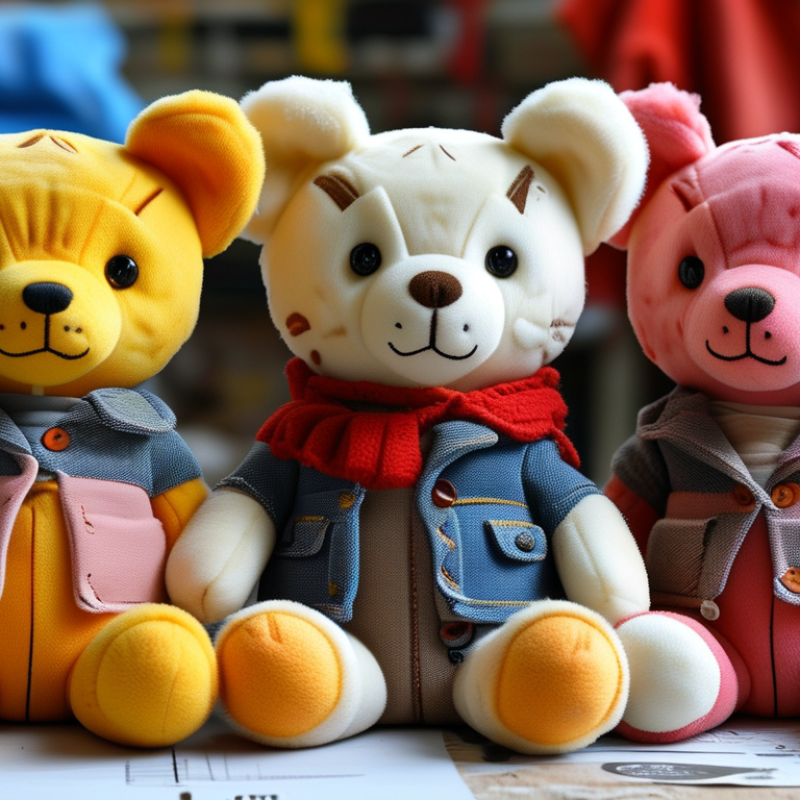
What a Plush Toy Factory Is and What It Produces
A plush toy factory is a specialized production site that turns approved designs into soft, washable play products. It produces stuffed animals, character-shaped toys, pillows, comforters, baby rattles, and customized promotional items. Production usually begins with fabric selection, pattern cutting, and color matching. Workers or automated machines then sew separate panels into a shell. The shell is inspected before filling.
Polyester fiber is commonly inserted through a small opening, often by a blowing machine. Operators adjust the filling by hand, because equal volume does not always create equal softness. Eyes, noses, embroidered details, labels, and sound components are added afterward. Each toy passes through checks for loose threads, weak seams, sharp parts, odor, and filling distribution. A factory also records material batches and inspection results, which supports traceability and more consistent quality.
Market reports show why these factories continue expanding. Fortune Business Insights estimated the global stuffed and plush toys market at about 7.28 billion dollars in 2023. Grand View Research reported a different value because market definitions and regional coverage vary. That difference deserves attention. It reminds manufacturers not to treat forecasts as exact production targets. Demand is influenced by children’s products, gifting, licensed designs, seasonal purchasing, and adult collectors. Yet a factory produces more than cute shapes. It manages textile engineering, sample development, packaging, testing, labor skills, and waste control. Small design changes can affect sewing time significantly. Sometimes, the simplest toy is the hardest to make well.
What Is a Plush Toy Factory and How Does It Work? - What a Plush Toy Factory Is and What It Produces
| Factory Area or Stage | Main Activities | Typical Materials or Equipment | Result or Quality Check |
|---|---|---|---|
| Product Design | Creates the character concept, dimensions, color plan, sewing pattern, and sample specifications. | Sketches, digital design tools, pattern templates, prototype samples. | The design is reviewed for appearance, construction feasibility, safety, and consistency. |
| Material Selection | Chooses fabrics, filling, thread, eyes, noses, labels, and packaging according to the product requirements. | Plush fabric, polyester fiberfill, thread, plastic or embroidered features, cartons and bags. | Materials are checked for color, texture, strength, cleanliness, and suitability for the intended age group. |
| Fabric Cutting | Transfers pattern pieces to fabric and cuts the shapes needed for the body and accessories. | Fabric spreading tables, cutting dies, manual tools, or computerized cutting equipment. | Pieces are checked for correct size, orientation, quantity, and visible fabric defects. |
| Sewing and Assembly | Joins fabric pieces, attaches accessories, and leaves an opening for filling before final closure. | Industrial sewing machines, needles, thread, embroidery machines, and hand-sewing tools. | Seams are inspected for alignment, strength, loose threads, skipped stitches, and correct component placement. |
| Filling | Fills the sewn shell to achieve the planned softness, shape, and weight. | Polyester fiberfill, stuffing machines, scales, and manual shaping tools. | The toy is checked for even filling, balanced shape, acceptable firmness, and absence of hard or empty areas. |
| Final Closure and Finishing | Closes the filling opening, trims threads, shapes the toy, and adds final decorative details. | Hand-sewing tools, thread trimmers, brushes, steam equipment, and finishing tools. | The finished surface should be clean, evenly shaped, securely closed, and free from loose threads. |
| Quality and Safety Inspection | Performs visual, dimensional, seam, component, and packaging inspections before release. | Measuring tools, pull-test equipment, metal detectors where required, inspection checklists. | Products are screened for construction defects, detachable parts, sharp edges, contamination, and labeling accuracy. |
| Packing and Shipping | Folds or arranges the toys, applies labels, packs them into shipping cartons, and prepares order documentation. | Polybags or paper packaging, labels, cartons, barcode systems, pallets, and shipping records. | Carton quantities, product identification, packaging condition, and shipping accuracy are verified. |
Common Plush Toy Products
| Product Category | Typical Characteristics | Common Applications |
|---|---|---|
| Animal Plush Toys | Soft three-dimensional shapes representing familiar or imaginary animals. | Children’s toys, educational collections, gifts, and room decoration. |
| Character Plush Toys | Products based on original character designs, with distinctive colors, clothing, or facial features. | Entertainment merchandise, promotional programs, and collectible ranges. |
| Baby and Infant Plush | Simple forms with soft fabrics, securely attached features, and age-appropriate construction. | Nursery products, comfort items, and early-childhood gifts. |
| Decorative and Promotional Plush | Customized shapes, colors, embroidered details, or textile messages. | Events, campaigns, hospitality settings, seasonal displays, and themed interiors. |
 '
'
