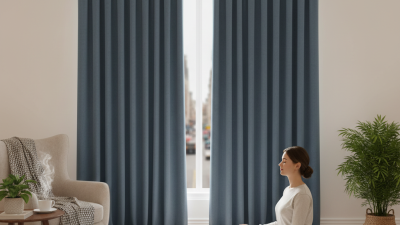
China Top 10 Sound Dampening Curtains Manufacturers

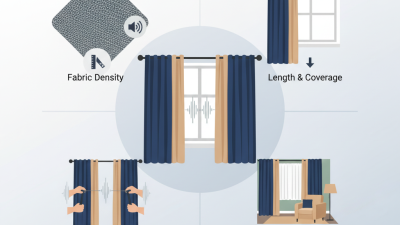
Choosing the right sound dampening curtains requires more than comparing attractive product photos. Acoustic performance depends on fabric density, multilayer construction, installation gaps, and room design. A heavy curtain may reduce reflected noise, yet it cannot replace properly sealed walls or professional acoustic treatment.

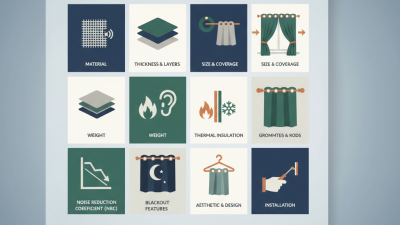
This guide introduces China’s top 10 sound dampening curtains manufacturers through practical evaluation criteria. These include material quality, stated acoustic data, manufacturing experience, customization options, quality control, and export capability. Attention is also given to flame-retardant treatments, stitching strength, track systems, and maintenance requirements. Such details matter in recording studios, conference rooms, hotels, schools, theaters, and busy home offices.

Real performance can vary. It depends on the room.

A reliable manufacturer should explain test methods instead of making vague promises. Buyers should request fabric samples, technical sheets, test reports, and installation guidance before placing large orders. Direct conversations with sales engineers can reveal whether a supplier understands reverberation, sound reflection, and practical curtain placement. Manufacturing scale also deserves careful review, because a large factory is not automatically the most suitable partner.

No ranking is perfect. Supplier capabilities may change, and product results depend on correct installation. This overview therefore aims to provide a useful starting point, not an absolute verdict. By comparing technical evidence, communication quality, and application experience, readers can identify manufacturers that offer dependable solutions rather than impressive claims alone.
China Top 10 Sound Dampening Curtains Manufacturers

Sound Dampening Curtains: Definition, Functions, and Key Features

Sound dampening curtains are dense, flexible barriers designed to reduce reflected and transmitted noise. They usually combine layered fabrics, acoustic fillers, and sealed edges. Unlike ordinary drapes, they add mass where sound energy needs resistance.

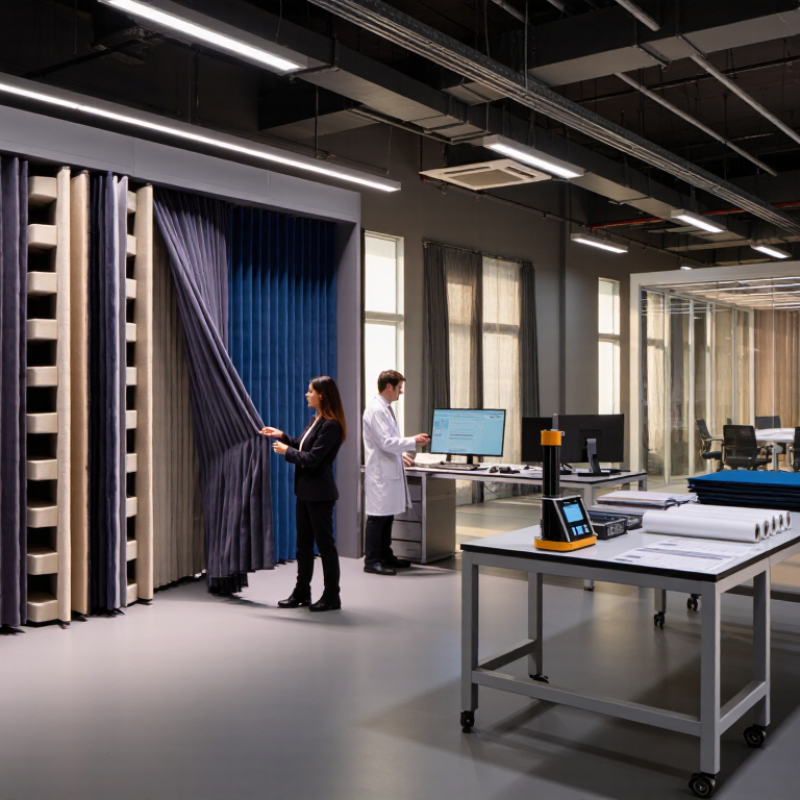
In a workshop, these curtains can separate cutting stations, rehearsal areas, or temporary recording zones. They soften sharp noise from machinery and reduce echo between hard surfaces.

Their performance depends on frequency, installation, and coverage. A curtain with open gaps cannot control sound reliably. Small details matter.

Key features include high surface weight, overlapping panels, reinforced eyelets, and floor-to-ceiling coverage.

Some systems use movable tracks for quick layout changes. A good supplier should provide laboratory ratings, material specifications, and installation guidance. Ask whether the test data matches your room conditions. It often does not.

Curtains can improve comfort, but they cannot replace wall insulation or hearing protection. In practice, measuring noise before and after installation gives a more dependable assessment than relying on appearance. Resistant fabric, washable surfaces, and secure mounting also support safer, longer service. Manufacturers with technical testing, consistent stitching, and responsive after-sales support are easier to evaluate.

China’s Sound Dampening Curtain Manufacturing Landscape

China’s sound dampening curtain sector is no longer limited to theater drapes. Manufacturers now serve studios, schools, hotels, factories, and movable room partitions. Their work combines textile engineering, acoustic testing, and export-focused production. The strongest suppliers usually offer layered fabrics, dense inner materials, and reinforced hanging systems. Details matter.

A typical curtain may include a decorative outer layer, sound-absorbing filling, and a sealed blackout backing. Acoustic performance depends on mounting, overlap, pleats, and air gaps. A heavy fabric alone is not enough. During factory reviews, buyers should request independent test reports and production samples. Samples should be checked for stitching, edge sealing, fabric odor, color consistency, and track movement. Ask whether testing used comparable room conditions. Results can change significantly.

China’s manufacturing landscape remains highly customizable. Factories can adjust dimensions, pleat ratios, track lengths, colors, and fire-performance specifications for different projects. Many suppliers also support small pilot orders before larger production. However, catalog claims sometimes sound more precise than real rooms. That gap deserves attention. On-site measurements, installation drawings, and clear performance targets improve reliability. Low-frequency noise remains difficult for curtains, especially near machinery or traffic. Some manufacturers explain this limitation carefully; others do not. Buyers should examine packaging, replacement-part availability, inspection procedures, and communication during revisions. These practical details often reveal more than polished brochures.

China Top 10 Sound Dampening Curtains Manufacturers - China’s Sound Dampening Curtain Manufacturing Landscape

Comparative overview of ten representative Chinese manufacturing profiles based on commonly published product specifications, acoustic testing practices, fire-safety requirements, and export-oriented production capabilities.

No. Manufacturer Profile Primary Product Focus Curtain Construction Acoustic Test Basis Typical Sound Reduction Fire-Safety Options Maximum Fabric Width Customization Capability
1 Manufacturer Profile 01 Industrial acoustic curtains and machinery enclosures Multi-layer polyester or fiberglass fabric with dense acoustic barrier and quilted absorber ISO 10140, ISO 717-1, or ASTM E90 testing, subject to project specification Approximately 15–30 dB Flame-retardant fabric; NFPA 701 or equivalent options available Typically 3–5 m per panel Custom dimensions, track systems, grommets, overlaps, and inspection windows
2 Manufacturer Profile 02 Recording, broadcasting, and studio sound-control curtains Heavy velour, acoustic textile, or layered theater fabric with absorptive backing Sound absorption commonly evaluated under ISO 354 or ASTM C423 Absorption coefficient commonly up to αw 0.60–0.95 Inherently or chemically flame-retardant textile selections Typically 2.8–4.2 m per panel Color matching, pleat ratios, stage tracks, motorization, and tailored hems
3 Manufacturer Profile 03 Factory partitions and temporary acoustic barriers Reinforced PVC-coated fabric combined with mineral-fiber or polyester acoustic layers Project-specific laboratory or field testing using ISO or ASTM methods Approximately 12–25 dB, depending on sealing and installation PVC and textile flame-retardant grades available Typically 4–6 m per panel Heavy-duty edges, magnetic closures, roller systems, and floor seals
4 Manufacturer Profile 04 Gymnasium, sports hall, and multipurpose-room curtains Large-format textile curtains with reinforced top headers and acoustic lining Acoustic absorption data generally referenced to ISO 354 or ASTM C423 Typical absorption rating of αw 0.40–0.85 FR polyester, NFPA 701, and selected regional fire classifications Typically 4–8 m per panel Oversized panels, folding configurations, ceiling tracks, and retractable systems
5 Manufacturer Profile 05 HVAC, generator, and compressor noise-control curtains Weather-resistant outer layer, limp-mass barrier, and quilted acoustic core ASTM E90, ASTM E413, or ISO 10140 depending on application Approximately 18–32 dB in controlled installation conditions Flame-retardant, low-smoke, and oil-resistant material options Typically 2.5–5 m per panel Ventilation cut-outs, cable ports, removable sections, and access doors
6 Manufacturer Profile 06 Theater, auditorium, and exhibition-space acoustic drapes High-density theatrical fabric with fullness, lining, and optional acoustic interlayer ISO 354 absorption testing and theater fire-safety specifications Absorption coefficient commonly up to αw 0.70–0.95 NFPA 701, EN 13501-1, or locally accepted flame-retardant treatments Typically 3–6 m per panel Custom pleating, decorative finishes, motorized tracks, and stage masking
7 Manufacturer Profile 07 Construction-site and outdoor noise-screening curtains UV-resistant coated textile with acoustic barrier, weighted bottom, and reinforced seams Field performance commonly assessed against project noise-control requirements Approximately 8–18 dB under suitable coverage conditions Flame-retardant and weather-resistant coated fabric options Typically 2–4 m per panel Printed identification, eyelets, sand pockets, zippers, and modular connection points
8 Manufacturer Profile 08 Healthcare, education, and commercial acoustic partitions Cleanable polyester or vinyl textile with lightweight absorptive backing ISO 354, ASTM C423, and indoor-environment specifications Typical absorption rating of αw 0.35–0.75 Flame-retardant, antimicrobial, and low-VOC material selections Typically 2.5–4 m per panel Washable surfaces, antibacterial finishes, privacy tracks, and color coordination
9 Manufacturer Profile 09 Modular acoustic booths and enclosed workspaces Fabric-covered panels with recycled PET, mineral wool, or composite acoustic cores ISO 354, ASTM C423, and room-acoustic performance calculations Typical absorption coefficient of αw 0.60–1.00 FR polyester, low-emission adhesives, and recycled-content materials Typically 2–3.2 m per panel Modular sizing, cable access, ventilation integration, and removable covers
10 Manufacturer Profile 10 Export-oriented custom acoustic curtain projects Application-specific combinations of absorber, barrier, liner, and protective outer fabric ISO, ASTM, EN, and customer-approved laboratory test methods Approximately 10–30 dB, depending on product structure and installation NFPA 701, EN 13501-1, ASTM E84, or destination-market requirements Typically 3–6 m per panel OEM production, private-label packaging, technical drawings, samples, and project engineering
Technical note: Acoustic performance varies significantly with curtain mass, air gaps, panel overlap, ceiling and floor sealing, installation geometry, and test conditions. The listed ranges are representative industry benchmarks rather than guarantees for any specific product or supplier.

Top 10 Chinese Sound Dampening Curtain Manufacturers

China’s top 10 sound dampening curtain manufacturers are often evaluated through fabric performance, factory control, and customization ability. The strongest suppliers usually produce multilayer curtains with dense outer fabric, acoustic felt, and weighted hems. These layers help reduce reflected noise, although they cannot replace wall insulation.

In practical sourcing, I examine test reports, stitching quality, and sample consistency. A reliable manufacturer should explain sound absorption ratings, fabric weight, fire-retardant treatment, and washing limits. Factory videos are useful, but an independent audit provides stronger evidence. Ask for a full-size sample. Small samples can hide sagging, light leakage, or weak grommets.

Many Chinese manufacturers support hotels, recording rooms, schools, offices, and home theaters. They may offer ceiling tracks, overlapping panels, custom colors, and extra-wide dimensions. Check whether the curtain is made for absorption or simple visual privacy. The difference matters. Delivery estimates also need careful review, especially for custom orders. I have found that attractive specifications do not always mean better acoustic results. Some suppliers present impressive numbers without explaining the testing room or measurement method. That deserves a second question.

Materials, Production Standards, and Customization Options

China Top 10 Sound Dampening Curtains Manufacturers: Materials, Production Standards, and Customization Options

Choosing sound dampening curtains requires more than checking fabric weight. Multilayer polyester, recycled PET, fiberglass, and mass-loaded vinyl offer different acoustic behavior. Dense outer layers block some transmission. Porous inner layers absorb reflected sound. A curtain is not a wall. Its performance depends heavily on gaps, folds, ceiling height, and installation distance.

The World Health Organization recommends keeping road traffic noise below 53 dB Lden and nighttime exposure below 45 dB Lnight. These figures explain why factories should test products rather than promise silence. ISO 354 measures sound absorption in a reverberation room, while ISO 10140 evaluates airborne sound insulation. ASTM C423 can also provide an NRC rating. These standards are useful, but ratings from different laboratories may not compare perfectly.

Industry forecasts, including Grand View Research’s acoustic insulation market analysis, indicate mid-single-digit annual growth through 2030. This reflects stronger demand for flexible noise control in studios, offices, hotels, and industrial spaces.

When reviewing Chinese manufacturers, request laboratory reports, fabric composition, fire-performance records, seam details, and weight per square metre. Custom options may include 100–300 mm overlap, ceiling tracks, magnetic closures, blackout coatings, and washable covers.

Recycled materials can reduce environmental impact, though their acoustic performance needs proof. I would question any “99% noise reduction” claim without frequency-specific test data. Real rooms are messier.

How to Evaluate and Select a Reliable Manufacturer

China Top 10 Sound Dampening Curtains Manufacturers: How to Evaluate and Select a Reliable Manufacturer

When comparing China’s top ten sound dampening curtain manufacturers, request measurable evidence, not attractive showroom claims. ASTM C423 evaluates sound absorption through the Noise Reduction Coefficient, or NRC, on a 0–1 scale. However, NRC alone does not prove room-wide noise reduction. Ask for complete laboratory reports, sample dimensions, mounting methods, and test frequencies.

Check whether testing follows recognized procedures, such as ASTM C423 or ISO 354. ISO 10140 can also help assess airborne sound insulation in building elements. The World Health Organization’s Night Noise Guidelines for Europe recommends bedroom noise below 30 dB(A) indoors at night. Curtains rarely achieve this alone. Treat dramatic decibel promises carefully. Ask for the actual reduction range.

Material inspection should include fabric weight, multilayer construction, seam density, and side-gap design. Request flame-resistance documentation where local regulations require it. Audit production records, inspection checkpoints, packaging strength, and replacement policies. Ask for a pre-production sample. Test it beside a window, where sound often leaks around the curtain.

Ask for raw data.

A reliable supplier explains limitations clearly. One common mistake is judging thickness by hand and ignoring installation gaps. I would also compare color consistency across batches, because acoustic performance is useless if delivery quality changes. Use independent verification when the order is large.

'