China Top 10 Air Pick Manufacturers for Global Buyers
China Air Pick tools support demanding work in mining, foundries, construction, ship repair, and concrete maintenance. Their compact bodies deliver repeated impact without electric motors near wet or dusty work areas. Yet a polished catalogue does not guarantee dependable field performance. Buyers must examine more than price, export volume, or attractive product photographs.
“An air pick should be judged by impact stability, serviceability, and honest performance data,” says Zhang Wei, a pneumatic-tool engineer with over fifteen years of manufacturing experience in Zhejiang. His advice reflects practical purchasing concerns. Air consumption, operating pressure, stroke frequency, tool weight, handle insulation, and chisel compatibility affect daily productivity. A worker holding a heavy tool for eight hours will notice small design weaknesses quickly. So will a maintenance manager facing damaged seals.
This guide reviews ten Chinese manufacturers for global buyers. It compares product range, factory capability, quality-control procedures, customization support, documentation, and after-sales responsiveness. Some companies focus on mining picks, while others produce broader pneumatic equipment. The differences matter.
Look closely.
A reliable supplier should provide test records, clear specifications, replacement-part information, and traceable production details. Independent inspections can reduce uncertainty before shipment. However, even a strong factory may have inconsistent batches or slower communication during peak seasons. That uncomfortable possibility deserves attention.
The ranking is therefore not based on marketing claims alone. It considers practical evidence, buyer feedback, manufacturing experience, and suitability for different operating environments. No supplier is perfect. Global purchasers should verify current certifications, sample performance, warranty terms, and local safety requirements before placing a substantial order.
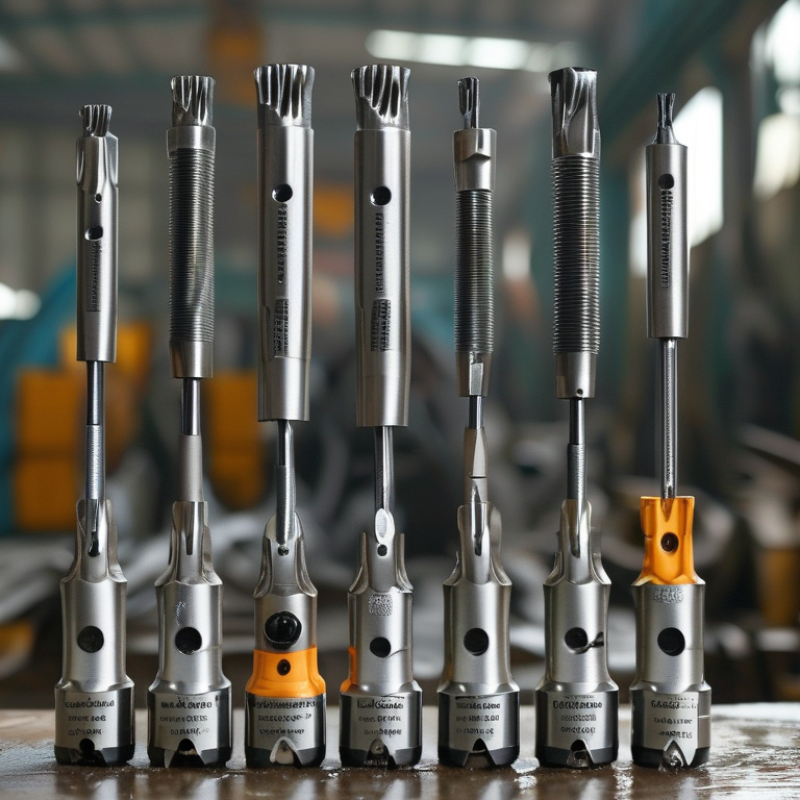
Air picks are compact pneumatic tools used for breaking, chipping, and surface preparation. For global buyers, pressure, airflow, and impact rate matter more than appearance. A working range of 90–120 PSI usually supports steady striking performance. However, pressure alone cannot predict real output. A restricted hose may reduce force at the tool.
Air consumption commonly falls between 25 and 45 CFM. Your compressor should provide this volume continuously, not only during startup. For example, a 30 CFM pick can strain a small compressor after several minutes. The tool may still run, but its blows become softer. That detail is easy to miss. Use a short, correctly sized hose and inspect couplings for leaks before testing.
Impact rates of 1,500–3,000 BPM affect control and material removal. Lower BPM can feel more manageable on dense surfaces, while higher BPM may improve speed on lighter work. Actual performance depends on stroke length, bit condition, lubrication, and operator technique. A reliable manufacturer should publish tested operating data, noise information, maintenance intervals, and replacement-part availability. Ask for test conditions, because advertised numbers are not always directly comparable. I would also check vibration readings and service support before placing a large order. My earlier assumption that higher BPM always meant better productivity was too simple. In practice, balanced airflow and controllable impact often matter more.
China Top 10 Air Pick Manufacturers for Global Buyers
China’s leading air pick manufacturers serve construction, mining, foundries, and repair workshops. Their product ranges usually include pneumatic picks, rock drills, chipping hammers, hoses, chisels, and spare seals. Some factories focus on compact hand tools, while others produce heavy-duty models for continuous breaking work. This difference matters more than a polished catalog.
A practical comparison should examine impact frequency, air consumption, tool weight, and handle design. Buyers should also check whether replacement valves, springs, and bits are available separately. Export-oriented manufacturers often provide English manuals, wooden cases, and customized labels. Many ship through major Chinese ports to distributors across Southeast Asia, Europe, Africa, the Middle East, and Latin America. Packaging may look simple, but strong internal protection prevents damaged fittings during long transport.
Real experience shows that factory scale does not always guarantee better field performance. A smaller producer may offer faster technical communication, but its inspection records can be less consistent. Large suppliers may support broader product ranges, yet their response times can vary. No ranking is perfect. Buyers should request test videos, air-pressure data, sample units, and warranty terms before placing volume orders. One overlooked detail is local air quality; moisture and dust can shorten tool life quickly. In my view, export reach should be judged by repeat service, not shipment counts alone.
China Top 10 Air Pick Manufacturers for Global Buyers
Comparing air picks requires more than checking blows per minute. Impact energy, usually listed in joules, shows how much force reaches the material. However, manufacturers may test energy differently. ISO 28927-10 focuses on vibration measurement, not a universal impact-energy rating. Ask for the test method, operating pressure, and air consumption.
Weight affects control during long repairs. A lighter tool suits overhead work and narrow spaces. Heavier models can transfer stronger impacts, but they may increase operator fatigue. Check the complete tool weight, including the retainer and hose connection. Shank size matters too. Common options include 0.580-inch and 0.680-inch hex shanks. The correct size must match available points, chisels, and moil tools. A perfect cylinder is useless with the wrong shank.
Noise needs serious attention. NIOSH recommends limiting occupational exposure to 85 dBA over eight hours, while OSHA uses a 90 dBA eight-hour permissible exposure limit under its general noise standard. Pneumatic picks can exceed these levels near the operator’s ear. Request sound-pressure data, not only sound-power data. Ear protection alone is not enough. Enclosures, mufflers, maintenance, and shorter trigger time also matter. A neat comparison table can still mislead. My first buying review underweighted vibration and hose size. That was a mistake. Real performance depends on the operator, material hardness, and stable air pressure.
Representative specifications for common pneumatic air-pick classes. Actual performance varies with air pressure, stroke length, tooling, and test conditions.
Higher impact energy can improve material-breaking capacity, while lower weight improves handling. Shank size must match the selected tool, and noise levels above 100 dB(A) generally require hearing protection and a documented workplace noise assessment.
When global buyers compare China’s top 10 air pick manufacturers, compliance should guide the shortlist. ISO 9001 shows a controlled quality management system. It does not prove that every tool is safe.
Ask for valid certificates, audit records, and traceable production documents. Check whether the certificate covers the correct factory and product category. A reliable manufacturer should explain inspection points, material controls, and corrective actions. Records matter.
CE marking requires more than a printed logo. The manufacturer should complete a risk assessment, prepare technical documentation, and issue a valid Declaration of Conformity. Instructions should clearly state operating pressure, vibration risks, lubrication, maintenance, and protective equipment. Verify the marking before shipment.
EN 792 requirements may appear in older specifications for hand-held non-electric power tools. Buyers should confirm the exact edition and whether a current replacement standard applies to the project. Test reports should match the supplied air pick, not a similar model. This detail is often missed.
Ask for practical evidence. Request sample inspection reports, noise and vibration data, and photographs of identification plates. Check whether serial numbers link to final inspections. A factory may pass an audit yet still have weak after-sales traceability. That gap deserves attention.
Do not rely on certificates alone. Speak with the engineering and quality teams. Their answers often reveal more than polished documents.
Anonymous buyer-screening profiles based on common pneumatic air-pick configurations. Product specifications and compliance documents must be verified against the current model, technical file, and shipment documentation.
| Rank | Anonymous Manufacturer Profile | Typical Product Class | Operating Pressure | Air Consumption | Blows per Minute | Stroke Length | Approx. Tool Weight | Common Applications | ISO 9001 Evidence to Request | CE Documentation to Request | EN 792 / EN ISO 11148 Check |
|---|---|---|---|---|---|---|---|---|---|---|---|
| 1 | Manufacturer Profile 01 | Heavy-duty air pick | 6.3 bar / 90 psi nominal | 22–30 CFM | 1,000–1,600 BPM | 100–125 mm | 12–18 kg | Quarrying, demolition, foundry work | Valid certificate, issuing body, scope, and certificate number | EU Declaration of Conformity, risk assessment, user instructions, and technical documentation | EN 792 is a legacy reference; request evidence against the applicable EN ISO 11148 series |
| 2 | Manufacturer Profile 02 | Medium-duty air pick | 6.3 bar / 90 psi nominal | 16–24 CFM | 1,400–2,000 BPM | 75–100 mm | 8–12 kg | Concrete breaking, repair, maintenance | Certificate validity, manufacturing-site address, and audit scope | Declaration of Conformity matching the exact model and manufacturer address | Confirm the exact safety standard, edition, and test report referenced in the technical file |
| 3 | Manufacturer Profile 03 | Medium-duty air pick | 6.3 bar / 90 psi nominal | 15–22 CFM | 1,600–2,200 BPM | 65–90 mm | 7–11 kg | Road maintenance, masonry, ship repair | Certificate number, expiry date, and certification body verification link | Risk assessment, noise and vibration data, and operating instructions | Check conformity with the relevant non-rotary pneumatic-tool requirements |
| 4 | Manufacturer Profile 04 | Light-duty air pick | 6.3 bar / 90 psi nominal | 10–16 CFM | 2,000–2,800 BPM | 40–65 mm | 4–7 kg | Tile removal, light chipping, workshop use | Scope must include the relevant production and quality-control activities | Model-specific declaration and safety instructions in the destination-market language | Do not rely on “EN 792 compliant” wording alone; request current supporting evidence |
| 5 | Manufacturer Profile 05 | Heavy-duty low-speed air pick | 6.3 bar / 90 psi nominal | 24–32 CFM | 900–1,400 BPM | 100–150 mm | 14–20 kg | Hard rock, asphalt, heavy demolition | Verify certificate authenticity directly with the certification body | Technical file, essential safety information, and conformity assessment records | Review vibration, noise, trigger, hose connection, and guarding requirements |
| 6 | Manufacturer Profile 06 | Compact air pick | 6.3 bar / 90 psi nominal | 8–14 CFM | 2,200–3,000 BPM | 35–55 mm | 3–5 kg | Light masonry, maintenance, confined spaces | Confirm the certificate covers the actual manufacturing location | Model number, serial identification, declaration, and safety markings | Request the applicable current EN ISO 11148 part and conformity test results |
| 7 | Manufacturer Profile 07 | Long-stroke air pick | 6.3 bar / 90 psi nominal | 18–28 CFM | 1,100–1,700 BPM | 100–140 mm | 10–16 kg | Deep concrete, refractory removal, excavation | Check quality-management scope, validity, and surveillance status | Include technical construction file and documented risk-control measures | Ensure the test configuration matches the supplied handle, bit, and hose assembly |
| 8 | Manufacturer Profile 08 | Ergonomic anti-vibration air pick | 6.3 bar / 90 psi nominal | 14–24 CFM | 1,500–2,300 BPM | 60–90 mm | 7–12 kg | Continuous maintenance and utility work | Request documented production controls for safety-critical components | Noise and vibration declaration, instructions, and conformity statement | Verify declared hand-arm vibration values using the applicable measurement method |
| 9 | Manufacturer Profile 09 | Interchangeable-bit air pick | 6.3 bar / 90 psi nominal | 12–22 CFM | 1,700–2,500 BPM | 50–85 mm | 5–9 kg | General construction and workshop applications | Certificate must identify the relevant manufacturing and assembly processes | Confirm all supplied accessories are covered by the safety instructions | Check bit-retention, unintended-start, hose, and operator-protection provisions |
| 10 | Manufacturer Profile 10 | Entry-level air pick | 6.3 bar / 90 psi nominal | 9–16 CFM | 1,800–2,700 BPM | 40–70 mm | 4–8 kg | Light demolition, repair, and fabrication | Verify certificate status, scope, and manufacturer identity before purchase | Request the declaration, manual, labels, and destination-market conformity records | Treat EN 792 as historical terminology and confirm the current applicable standard |
A low unit price rarely reflects the full cost of an air pick. The U.S. Department of Energy’s Compressed Air Challenge guidance reports that compressed-air systems can lose 20–30% of output through leaks and poor maintenance. Ask each manufacturer for tested air consumption, operating pressure, noise data, and a warranty with clear exclusions. A twelve-month warranty sounds useful, but coverage may exclude seals, hoses, and damage from contaminated air. That detail matters.
Set the MOQ against your real demand, not an optimistic forecast. Request a written lead time, production schedule, and shipping term. For urgent projects, confirm whether spare chisels, springs, valves, and seal kits are stocked locally. ISO 8573-1 provides a framework for compressed-air quality; suppliers should state the filtration level their tools require. Otherwise, moisture may enter the tool and shorten service life. Small error. Expensive lesson.
After-sales support should include assembly drawings, maintenance intervals, troubleshooting steps, and response-time commitments. Ask for one sample repair case, not only a polished brochure. The European Agency for Safety and Health at Work repeatedly links effective maintenance with reduced machinery risk, yet many buying teams measure only delivery speed. I have seen checklists that look complete but omit replacement-part prices. Add those prices, technician training options, and video-call support before signing. Supplier audits, production records, and inspection reports provide stronger evidence than sales promises.
We now offer custom-made commercial vehicle tarps, along with the ability to design your own curtains, noise panels, and strip doors—tailored to your exact needs!
At Singer Safety, we specialize in manufacturing high-performance tarps engineered to safely secure and protect your vehicle loads during transport.