10 Wall Panels Buying Tips for Global Buyers?

Buying Wall Panels across borders is not simply a search for the lowest factory price. Material composition, fire performance, moisture resistance, installation labor, packaging, and after-sales support can change the final cost dramatically. A panel that looks perfect under showroom lighting may swell beside a humid bathroom wall.

Industry data reinforces the need for careful decisions. The UNEP 2023 Global Status Report for Buildings and Construction states that buildings and construction consumed about 34% of global energy and produced around 37% of energy and process-related carbon emissions in 2022. This makes insulation, durability, and responsible sourcing important purchasing questions. Grand View Research also identifies renovation, commercial construction, and decorative interior applications as major drivers of wall-covering demand. However, market forecasts vary by product definition and region. Buyers should examine the methodology behind every report.

This guide presents 10 Wall Panels buying tips for global buyers. It covers supplier verification, core materials, surface finishes, fire classifications, dimensional tolerances, certifications, and shipment protection. It also considers local building codes, recycling claims, lead times, and installation training. Ask for test reports, not vague promises. Request samples in actual project conditions, including heat, moisture, and cleaning exposure. A certified product is not automatically suitable for every country. That detail is easy to miss. Buyers should compare landed cost rather than invoice price alone, including duties, freight, breakage, storage, and replacement risk. The process may feel slower, but one overlooked specification can create expensive rework. Even experienced purchasers can misjudge color consistency between batches. Careful records, clear contracts, and independent inspection provide stronger protection than confidence alone.
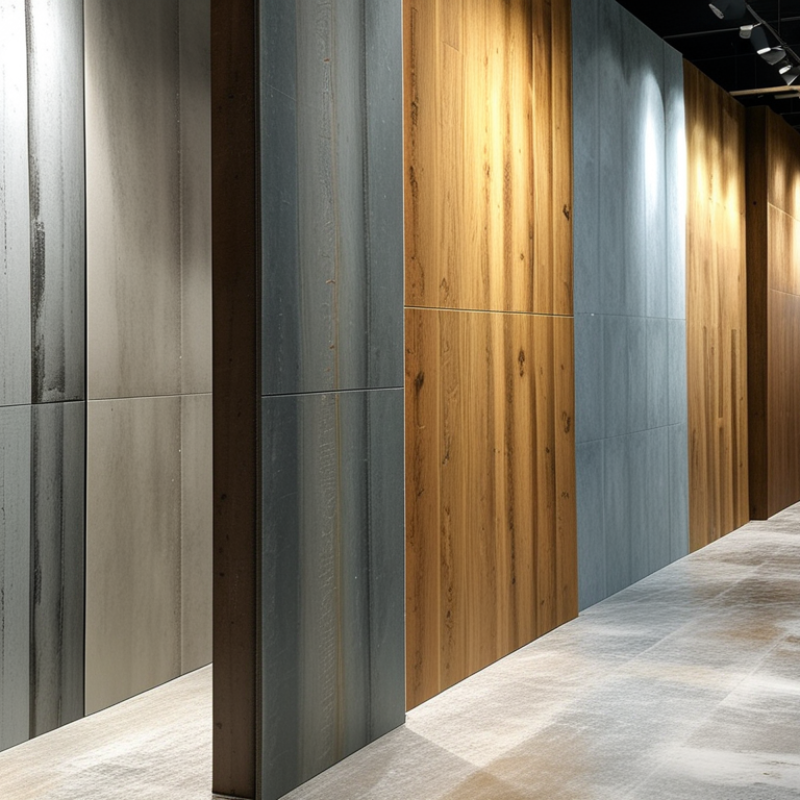
10 Wall Panels Buying Tips for Global Buyers?

Define Your Wall Panel Project Requirements

10 Wall Panels Buying Tips for Global Buyers

Define Your Wall Panel Project Requirements

A wall panel purchase starts with the room, not the catalogue. Record wall lengths, ceiling height, openings, corners, and fixing zones. Note the substrate, moisture exposure, temperature range, and cleaning routine. A bathroom wall needs different performance from a hotel corridor.

Write measurable targets. Specify panel thickness, surface finish, colour tolerance, impact resistance, acoustic performance, and expected service life. For fire safety, state the required local classification, such as EN 13501-1 or ASTM E84. These systems are not interchangeable. Confirm acceptance with the project consultant.

Standards matter. ISO 10140 supports laboratory sound-insulation testing, while ISO 14025 supports environmental product declarations. Ask for current test reports, installation instructions, batch traceability, and maintenance data. The 2023 Global Status Report for Buildings and Construction reports that buildings consumed over 34% of global energy in 2022 and produced 37% of energy-related and process emissions. Material choices deserve scrutiny.

Logistics also belong in the brief. Calculate crate dimensions, panel weights, spare quantities, lead time, and replacement access. A neat spreadsheet can still hide a bad assumption. I once underestimated corner waste in a patterned layout; the visual result was fine, but the delivery plan was not. Leave room for site measurements, mock-up approval, and one honest revision.

Compare Wall Panel Materials and Surface Finishes

When comparing wall panels for international projects, material choice should follow room conditions, not photographs.

PVC panels resist splashes and clean quickly, making them practical for bathrooms and utility areas. MDF panels provide a warm, stable base for printed or painted finishes, but swelling remains a risk around untreated edges. Solid wood feels authentic and ages beautifully. It also demands moisture control and careful sealing. Aluminum panels are lightweight, durable, and useful where impact resistance matters. Mineral-fiber panels can improve acoustic comfort, although their texture may not suit every interior.

Surface finish changes both appearance and maintenance. High-gloss coatings reflect light, yet they reveal fingerprints and fine scratches easily. Matte finishes hide small marks better and usually create a calmer visual effect. Wood veneer offers natural variation, but color differences between batches should be expected.

Textured or embossed surfaces add depth and can disguise minor wall irregularities. Still, dust may collect in deeper patterns. Samples matter. Inspect them under daylight, warm lighting, and angled light.

For global purchasing, request technical data, installation instructions, moisture limits, and verified fire-performance documents. Requirements can differ between countries, so one certificate may not cover every destination. Check panel thickness, edge treatment, packaging strength, and replacement availability. I have seen attractive panels fail because their cores were unsuitable for humid rooms. A low price can become expensive after warped panels, damaged corners, or difficult installation. My own judgment can be wrong when based only on a showroom sample; larger samples and a small site trial provide better evidence.

Check Dimensions, Performance Ratings, and Installation Needs

Wall panels can look identical online, yet their dimensions may vary by several millimeters. Check panel length, width, thickness, and usable coverage before comparing prices. Confirm whether measurements use millimeters or inches, especially when ordering across regions. Request a dimensional tolerance sheet, not only a product photograph. A 2,400 mm panel may not fit a 2,390 mm wall without cutting or visible joints.

Performance ratings should match the project environment. For wet rooms, verify water resistance and edge protection. For public interiors, review fire classification, impact resistance, acoustic performance, and surface durability. Ask for current test reports from recognized laboratories, including the testing method and report date. Do not rely on phrases such as “high performance.” They are too vague. I once treated a moisture-resistant panel as fully waterproof, which caused an avoidable installation problem. That mistake changed my purchasing checklist.

Installation needs can alter the total cost significantly. Confirm substrate requirements, adhesive compatibility, fixing spacing, joint profiles, and expansion gaps. Check whether installers need special cutting tools or protective equipment. A panel that weighs 18 kilograms may require two people to position safely. Allow extra material for cuts, damaged edges, and future repairs. Also inspect packaging details, because long panels can arrive with crushed corners after long-distance shipping. Local building rules still matter. Have a qualified professional review the specification when fire, moisture, or public safety is involved.

Evaluate Suppliers, Certifications, Pricing, and Shipping Terms

10 Wall Panels Buying Tips for Global Buyers

When I source wall panels internationally, I begin with the supplier’s production experience, not attractive photographs. Ask for factory details, recent project references, and a physical sample. Check whether the sample matches the proposed core, surface finish, thickness, and color. A polished sample can hide inconsistent batch quality. Request inspection records and clear replacement terms for damaged or defective panels.

Certifications need careful verification. Confirm the issuing laboratory, test date, product model, and applicable market standard. Fire performance, formaldehyde emissions, moisture resistance, and structural data may matter differently by project. Do not accept a certificate with no traceable report. I once treated a translated document as sufficient, and the missing test conditions caused delays. That was avoidable. Ask for updated reports when materials or production sites change.

Compare pricing on the same basis. Include panel size, accessories, packaging, minimum order quantity, tooling, inland transport, duties, and payment fees. A low unit price may conceal expensive edge trims or weak export packaging. Shipping terms must be written precisely, including Incoterms, loading port, delivery point, insurance, and responsibility for customs clearance. Confirm lead time in calendar days and request photographs before dispatch. Use third-party inspection when the order is large. It adds cost, but it can reveal warped panels, incorrect labels, or crushed cartons before the shipment travels thousands of miles. Payment milestones should match measurable production stages, not vague promises.

Confirm Samples, Quality Control, Warranty, and After-Sales Support

Before placing a large wall panel order, request physical samples from the same production line. Check color, texture, thickness, edge accuracy, and surface strength under natural light. A digital image is useful, but it cannot reveal a weak corner. Ask for installation instructions and a material specification sheet. Confirm whether the sample reflects the final batch.

Quality control should be visible, not promised vaguely. Request inspection records, tolerance ranges, moisture checks, and packaging photos before shipment. For larger projects, consider an independent pre-shipment inspection. Count panels, compare batch numbers, and photograph damaged cartons immediately. I once trusted a clean sample too quickly. The delivered texture was slightly different. That mistake taught me to approve a signed production sample.

Read the warranty line by line. Confirm coverage length, acceptable defects, installation responsibilities, and claim deadlines. Ask who pays for replacement panels and freight. After-sales support also needs practical details. Get a named contact, response times, spare-part availability, and remote installation guidance in writing. Test the contact before ordering with three specific questions. A fast reply is encouraging, but consistent support matters more. No promise replaces evidence. Reflect on your own checklist, too; buyers often inspect appearance and forget storage conditions, installer skill, or regional humidity.

10 Wall Panels Buying Tips for Global Buyers? - Confirm Samples, Quality Control, Warranty, and After-Sales Support

No. Buying Tip What to Confirm Recommended Evidence Practical Benchmark Red Flags and Buyer Action
1 Confirm the intended application Check whether the panel is suitable for interior walls, ceilings, wet areas, commercial spaces, or exterior use. Technical data sheet, installation guide, moisture limitations, and application photos. The product scope should clearly state permitted locations and environmental conditions. Avoid products described as “suitable for everything.” Match the panel specification to the project environment before ordering.
2 Request physical samples Compare color, texture, gloss, edge finishing, thickness, and surface consistency under different lighting. Approved sample signed or digitally recorded with product code, finish, thickness, and date. Keep one approved reference sample for pre-shipment and incoming inspection. Do not rely only on screen images. Require written confirmation that mass production will follow the approved sample.
3 Verify material composition Confirm the core, surface layer, backing, adhesive system, and any recycled or mineral content. Material declaration, safety data where applicable, and independent laboratory test reports. Declared composition should remain consistent across quotations, samples, production, and shipping documents. Unclear composition or changing material descriptions require clarification before payment or approval.
4 Set measurable quality standards Define acceptable limits for length, width, thickness, flatness, color variation, scratches, dents, and edge defects. A signed product specification and inspection checklist attached to the purchase order. Use measurable tolerances rather than descriptions such as “high quality” or “premium finish.” If no acceptance criteria exist, disputes become difficult. Agree on inspection rules before production.
5 Check performance and compliance Review fire behavior, moisture resistance, formaldehyde or VOC emissions, acoustic performance, and structural properties as relevant. Recent test reports showing the exact product construction and applicable test standard. Compliance requirements vary by destination, building type, and installation location. A certificate for a similar product may not apply. Confirm model, thickness, test method, and report validity.
6 Evaluate installation requirements Confirm substrate preparation, adhesive or fixing method, joint treatment, cutting tools, expansion gaps, and installer skill requirements. Detailed installation manual, accessory list, coverage calculation, and maintenance instructions. Installation guidance should specify substrate conditions, recommended tools, and panel orientation. Missing instructions can increase labor cost and installation failure risk. Request a complete method statement.
7 Review packaging and logistics Check carton strength, corner protection, pallet stability, moisture protection, labeling, and container loading plans. Packaging specification, loading photos, carton dimensions, gross weight, and packing list. Packaging should protect finished surfaces and support safe unloading at the destination. Weak corners, excessive empty space, or missing moisture protection can cause transit damage. Approve packaging before shipment.
8 Use independent quality control Decide whether inspection is required before shipment and define the inspection level and sampling method. Pre-production, during-production, or pre-shipment inspection report with photos and measurements. Inspection should compare production goods against the approved sample and purchase-order specifications. Never treat a factory’s internal check as the only safeguard for a large or customized order.
9 Clarify warranty terms Confirm warranty duration, covered defects, exclusions, claim documents, response time, and remedy options. Signed warranty policy linked to the exact product, batch, installation method, and purchase date. Warranty coverage should distinguish manufacturing defects from damage caused by storage, installation, misuse, or normal wear. A verbal warranty is not sufficient. Obtain written terms and confirm who pays replacement and freight costs.
10 Assess after-sales support Check technical communication, spare-panel policy, complaint handling, replacement process, and availability of installation advice. Named support contact, escalation procedure, response-time commitment, and documented claim workflow. Support arrangements should remain available after delivery, not only during quotation and order confirmation. Slow replies or unclear responsibility are warning signs. Test communication with technical questions before placing the order.

Buyer checklist: Approve the sample, specification, inspection plan, packaging, warranty, and after-sales process in writing before mass production.

'