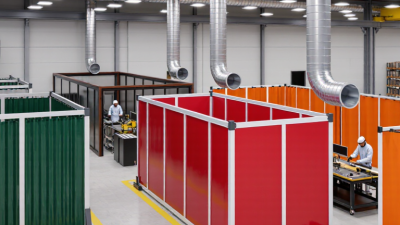
In a busy fabrication area, welding screens are more than simple partitions. They control intense arc light, sparks, hot spatter, and distracting glare near the welding point. A brief exposure can leave unprotected eyes painful and sensitive, even when the weld looks small. Screens also help separate workers from heat and flying particles without stopping necessary supervision. That balance matters. A practical safety barrier.
Experienced welders know that screen placement affects behavior as much as equipment selection. A properly positioned curtain shields nearby staff while maintaining clear access for inspection, ventilation, and emergency movement. Its material, height, condition, and transparency should match the process and work area. Manufacturers’ guidance and local occupational safety requirements deserve careful review before installation. Still, a compliant product can fail when gaps, damaged panels, or poor housekeeping are ignored. This is where routine checks become important. Walk past the booth. Look for exposed sightlines, curled edges, and blocked routes. The answer is not perfect isolation. It is controlled exposure. This article examines how welding screens support safer workplaces and where their limits appear. It also considers thoughtful use, because barriers protect best without creating false confidence.
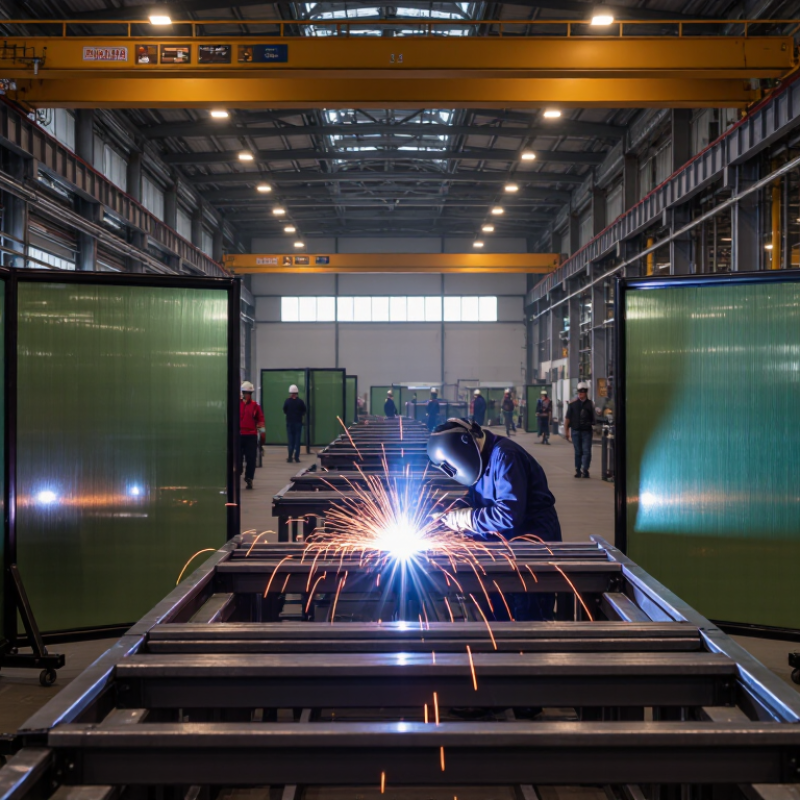
Welding screens are movable barriers that control arc light, sparks, spatter, and limited heat. They usually combine flame-resistant fabric, rigid panels, or transparent filter curtains. The material blocks harmful ultraviolet and infrared radiation while allowing supervisors to observe the work area. Some screens are opaque; others use filtered viewing panels. The correct choice depends on welding current, process, distance, and nearby traffic.
Their main function is separation. An arc can produce intense light within seconds, causing painful eye injuries known as “arc flash.” OSHA’s welding standard, 29 CFR 1910.252, requires screens when practical to protect nearby workers from direct arc rays. Screens also reduce accidental contact with hot particles. The National Institute for Occupational Safety and Health warns that welding fumes may contain metals such as manganese, nickel, and chromium. A screen cannot remove these fumes. Local exhaust ventilation and suitable respiratory controls remain necessary.
Installation details matter. Leave enough space for airflow, keep curtains close to the floor, and overlap sections at entrances. Inspect for tears, burn holes, and cloudy viewing panels. A 2023 OSHA fact sheet identifies hexavalent chromium’s permissible exposure limit as 5 micrograms per cubic meter over an eight-hour shift. That number is easy to overlook. In practice, workers sometimes treat a screen as complete protection, which is a mistake. Screens must be positioned carefully, maintained regularly, and combined with training, ventilation, eye protection, and fire prevention controls.
Welding screens help control hazards that workers may not notice immediately. A welding arc can release intense ultraviolet and infrared radiation. Direct exposure may injure unprotected eyes and skin. Screens block much of this line-of-sight radiation from nearby people. They also reduce the bright flash that can distract workers operating equipment.
Screens contain many sparks and small particles produced during cutting or welding. A hot spark can travel across an open work area and ignite nearby packaging, cloth, or dust. Properly positioned screens create a visible boundary around the task. They can also reduce accidental contact with molten metal fragments. Keep openings covered where practical. A small gap can still expose a walkway.
Welding screens help manage visual disruption, but they are not complete protection. They do not remove fumes, gases, heat, or dangerous noise. Local exhaust ventilation and suitable personal protective equipment remain necessary. In busy workshops, screens can also separate pedestrian routes from active work zones. This reduces surprise exposure when someone walks past.
Not always enough. Screen material, height, distance, and fire resistance must match the task. I have seen teams place screens too far away, then assume the whole area was protected. That assumption needs checking before work begins.
Welding screens do more than mark a work bay. They create a visible barrier between an arc and nearby people or equipment. OSHA’s 29 CFR 1910.252 requires screens or suitable shields when other employees may face arc radiation. Welding arcs produce ultraviolet, infrared, and intense visible light. OSHA identifies these emissions as serious eye and skin hazards. A worker walking past the booth may not expect the flash. That brief exposure can still cause injury.
Screens also contain sparks, hot slag, and small metal particles. They can protect cables, plastic housings, painted surfaces, and stored materials from heat damage. The ILO’s 2023 global estimates report about 2.93 million work-related deaths and 395 million nonfatal work injuries each year. Those figures are not welding-specific, but they show why basic controls deserve attention. In practical workshops, the barrier must match the process, stand securely, and remain free from tears or large gaps. Use flame-resistant materials and inspect them regularly. A dirty screen can hide damage.
A screen is not a complete control. It does not remove welding fumes, replace ventilation, or protect the operator’s eyes. This is where practice can become careless. Workers may install a curtain and assume the hazard is solved. OSHA and NIOSH guidance still supports local exhaust ventilation, suitable eye protection, training, and controlled access. The safest setup keeps the arc enclosed, sparks away from combustibles, and nearby workers outside the exposure zone.
Why Are Welding Screens Essential for Workplace Safety?
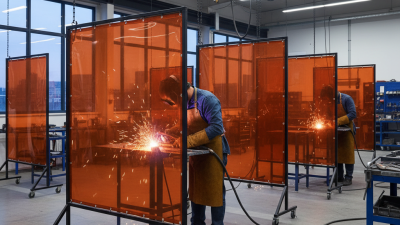
Welding screens create a controlled boundary around sparks, heat, fumes, and intense arc light. Their design protects nearby workers without stopping supervisors from observing the work. Transparent flame-resistant PVC is useful where visibility matters. Opaque coated fabric provides stronger visual separation. Fiberglass curtains can handle demanding heat conditions when their ratings match the task. A steel frame adds stability, while lockable casters allow careful repositioning between work areas.
The screen’s color and shading should suit the welding process and surrounding environment. Darker panels reduce arc glare, but they must not block essential supervision. Overlapping curtains help close side gaps where ultraviolet radiation may escape. Weighted bottoms reduce movement from ventilation or passing equipment. Mesh panels improve airflow, although they may offer less visual privacy. That gap matters. Screens should stand at a safe distance from heat sources, not touch hot metal, cylinders, or electrical equipment.
Reliable protection depends on daily use, not appearance alone. Inspect seams, grommets, wheels, and frame joints before each shift. Replace panels with burns, brittle surfaces, or permanent discoloration. Keep the floor area clear so workers do not trip while entering the enclosure. Screens support safety, but they never replace helmets, gloves, protective clothing, or suitable ventilation. In practice, teams sometimes choose convenience over coverage. I have seen a small opening expose an entire walkway to arc flash. No screen stays reliable forever.
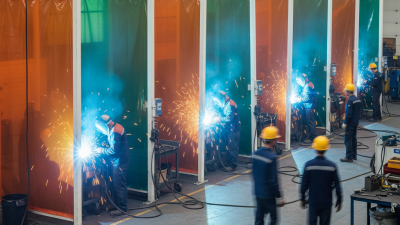
Welding screens help contain hazardous arc radiation, sparks, and spatter while separating nearby workers from the welding zone. Their materials and designs should be selected for flame resistance, durability, visibility control, and effective protection against ultraviolet and infrared radiation.
The chart shows OSHA minimum filter shade numbers for ferrous gas-shielded arc welding at different welding currents. Filter shade requirements apply to eye and face protection; welding screens provide an additional engineering control for protecting surrounding personnel from direct arc radiation, sparks, and spatter.
Source: OSHA 29 CFR 1910.133, Table 1.
Choosing welding screens starts with the hazard, not the color. The U.S. Bureau of Labor Statistics recorded 5,283 fatal work injuries in 2023, while welding exposes nearby workers to ultraviolet radiation, sparks, and metal fumes. NIOSH describes welding fumes as a complex mixture that requires effective exposure controls. Select screens with documented flame resistance, suitable UV attenuation, and enough opacity to protect passersby without blocking necessary supervision. Measure the work zone carefully. A screen that is too short leaves bright gaps at eye level.
Install screens close enough to contain sparks, but never restrict mechanical ventilation or emergency access. OSHA 29 CFR 1910.252 requires screens or shields to protect nearby workers from arc rays. Overlap movable panels, secure their bases, and check caster locks before welding begins. Keep combustible materials outside the spark path. Small gaps matter. In practice, poorly positioned curtains often fail because workers move them for convenience and forget to reset them.
Maintenance needs a written inspection routine. Examine seams, hooks, frames, wheels, and transparent viewing sections before each shift. Remove screens with burn holes, brittle surfaces, or warped edges. Clean them with the approved method; harsh solvents can weaken the material. Record replacements and train workers to report damage immediately. BLS injury figures are broad, not welding-specific, so they cannot prove that every screen prevents an injury. That limitation deserves attention, especially when a curtain appears intact but has lost its protective performance.
We now offer custom-made commercial vehicle tarps, along with the ability to design your own curtains, noise panels, and strip doors—tailored to your exact needs!
At Singer Safety, we specialize in manufacturing high-performance tarps engineered to safely secure and protect your vehicle loads during transport.