| 1 |
Fiberglass Acoustic Panels |
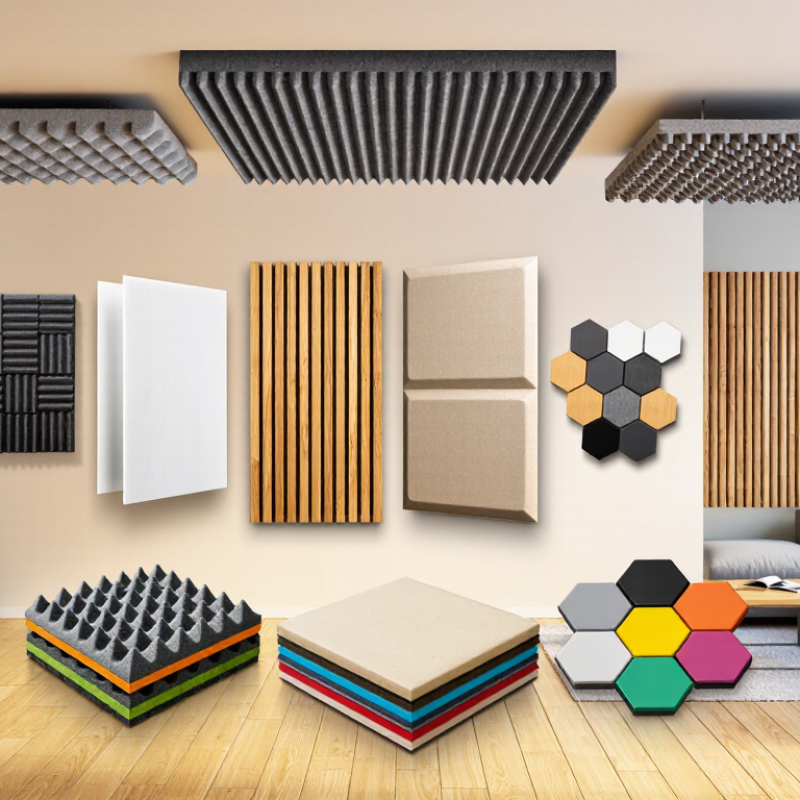
Rigid or semi-rigid glass-fiber core covered with acoustically transparent fabric. |
Offices, classrooms, studios, conference rooms, and media rooms. |
0.80–1.10 |
Mid and high frequencies, approximately 500–4,000 Hz. |
High absorption, good speech clarity, many thickness and fabric options. |
Does not block significant sound transmission through walls or floors. |
| 2 |
Mineral Wool Acoustic Panels |
Dense mineral-fiber board with a fabric, perforated, or decorative facing. |
Recording rooms, home theaters, workshops, and industrial interiors. |
0.85–1.15 |
Broadband absorption, with improved low-mid performance when thicker. |
Excellent fire resistance, durable structure, and strong broadband absorption. |
Heavier than foam and should be handled with appropriate protective measures. |
| 3 |
Fabric-Wrapped Wall Panels |
Absorptive fiberglass or mineral-wool core enclosed in a finished fabric shell. |
Large rooms where acoustic performance and appearance are equally important. |
0.75–1.05 |
Speech, music, and general room reverberation. |
Clean appearance, customizable colors, and useful wall coverage. |
Performance depends strongly on panel thickness, air gap, and installation coverage. |
| 4 |
PET Acoustic Felt Panels |
Pressed polyester fiber, often manufactured partly from recycled PET material. |
Open-plan offices, study areas, corridors, and decorative installations. |
0.40–0.95 |
Mid and high frequencies; thicker products extend absorption lower. |
Lightweight, easy to cut, visually flexible, and generally resistant to fiber shedding. |
Thin decorative sheets are less effective against bass and low-frequency vibration. |
| 5 |
Acoustic Foam Panels |
Open-cell polyurethane or melamine foam with a wedge, pyramid, or convoluted profile. |
Vocal booths, small studios, podcast rooms, and equipment enclosures. |
0.30–0.85 |
Primarily mid and high frequencies. |
Lightweight, affordable, and simple to install on suitable surfaces. |
Limited low-frequency absorption; fire ratings vary and must be verified. |
| 6 |
Bass Trap Panels |
Thick porous fiberglass, mineral wool, or foam designed for corners and room boundaries. |
Recording studios, home theaters, and rooms with excessive bass buildup. |
0.60–1.10 |
Low and low-mid frequencies, commonly below 250 Hz when sufficiently thick. |
Reduces modal buildup and improves bass consistency within the room. |
Requires substantial thickness or corner placement and does not stop external noise. |
| 7 |
Perforated Wood Acoustic Panels |
Perforated, slotted, or grooved wood facing backed by an absorptive layer and air space. |
Auditoriums, restaurants, offices, libraries, and architectural interiors. |
0.45–0.90 |
Mid frequencies, with the response influenced by perforation and backing depth. |
Combines sound absorption with a durable, finished architectural surface. |
More expensive and labor-intensive than simple fabric or foam panels. |
| 8 |
Mass-Loaded Vinyl Barrier Panels |
Flexible, dense vinyl sheet used as a limp-mass barrier in wall, ceiling, floor, or enclosure assemblies. |
Reducing airborne sound transmission through partitions and equipment enclosures. |
Not normally rated by NRC |
Broadband transmission loss, especially when combined with decoupling and insulation. |
Adds mass without requiring a rigid, thick panel. |
Heavy for its size and ineffective when seams, edges, or penetrations are left unsealed. |
| 9 |
Composite Barrier-and-Absorber Panels |
A layered system combining a dense barrier, resilient layer, and porous absorber. |
Machine rooms, vehicle interiors, HVAC enclosures, and demanding partition upgrades. |
0.45–0.90 |
Both airborne transmission and internal reverberation across a broad range. |
Provides absorption and transmission control in one integrated assembly. |
Usually thicker, heavier, and more difficult to install than a single-function panel. |
| 10 |
Acoustic Ceiling Clouds and Baffles |
Suspended absorptive panels installed horizontally as clouds or vertically as baffles. |
High-ceiling offices, cafeterias, gyms, workshops, and open-plan spaces. |
0.70–1.20 |
Room reverberation and speech-frequency reflections. |
Absorbs sound from both sides and works when wall space is limited. |
Does not provide a sealed sound barrier and requires secure overhead suspension. |


 '
'
